thl408
There are 445 users in the forums
thl408
Originally posted by thl408:
The 49ers called 4 running plays for the RB in the first half of the game for 7 yards gained. All four of those plays were run with what I consider base personnel because the Rams were in their defensive base personnel. The 49ers were either in 21 (2rb/1te/2wr) or 12 (1rb/2te/2wr) as the Rams went with their base 4-3 on these 4 RB carries in the first half.
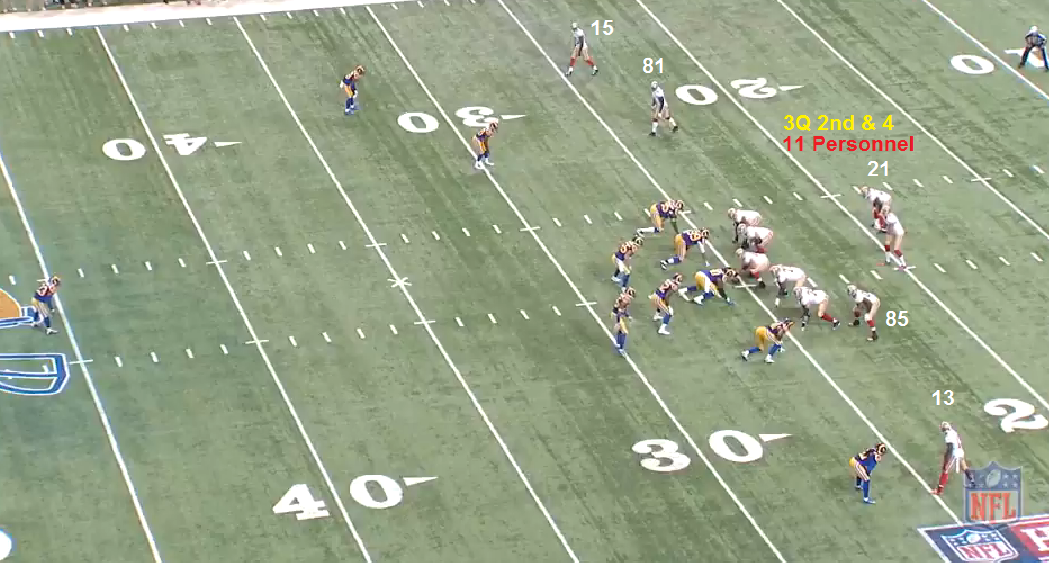
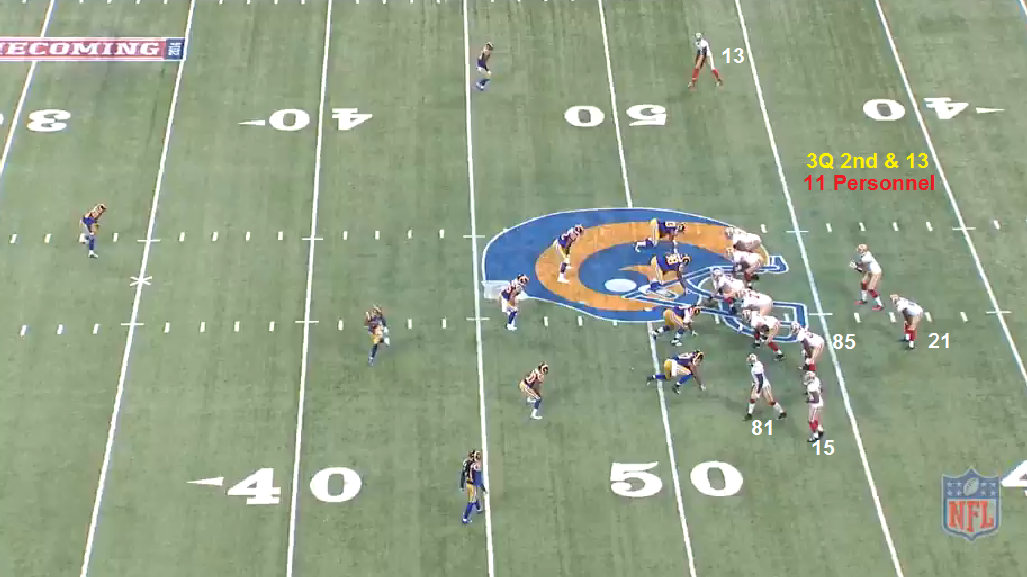
On the opening drive of the second half, the 49ers went down the field and scored a TD (Boldin TD). They changed up the running game by giving the ball to Gore out of 11 personnel (1rb/1te/3wr), most of the time from a spread formation. On that drive alone, they gave the ball to Gore 4 times, 3 of which came from 11 personnel.
This removes a lead blocker for Gore, but will give a 6 man box. Here are all the run plays from 11 personnel that was run in the second half, starting with the ones that came on the opening drive of the second half.
Runs from 11 personnel
#1
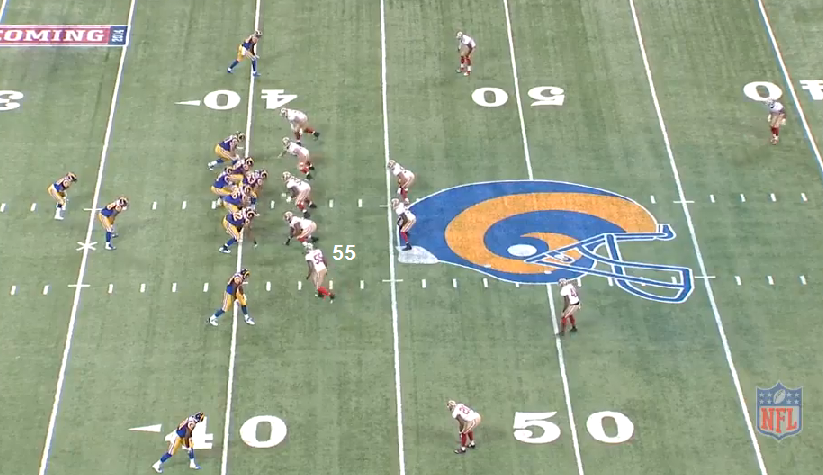
Rams in their nickel package.
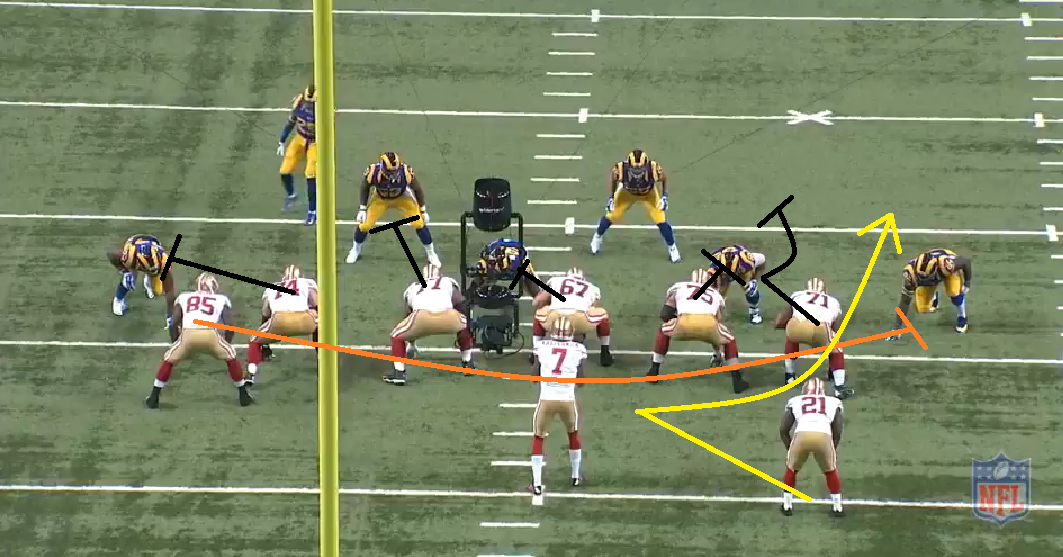
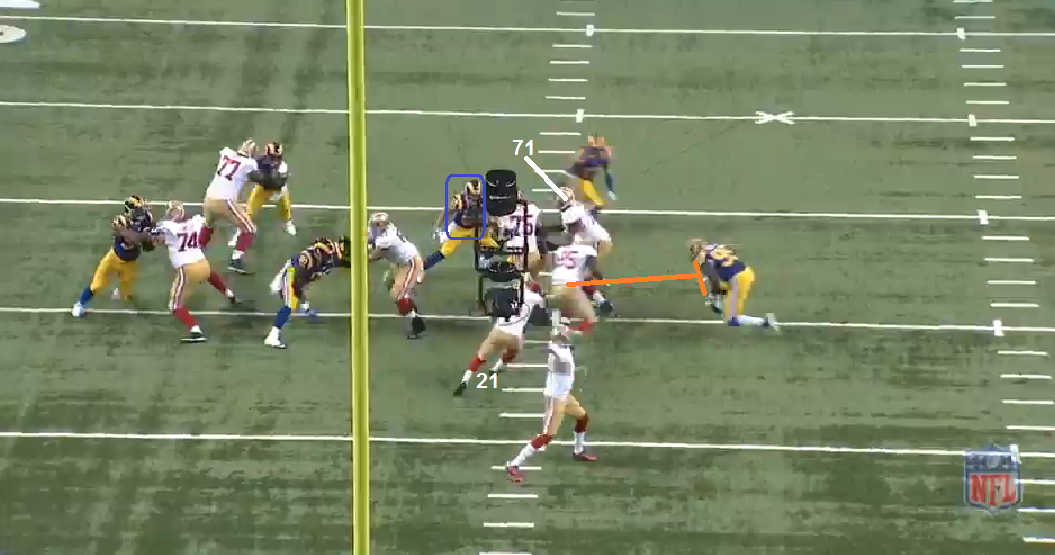
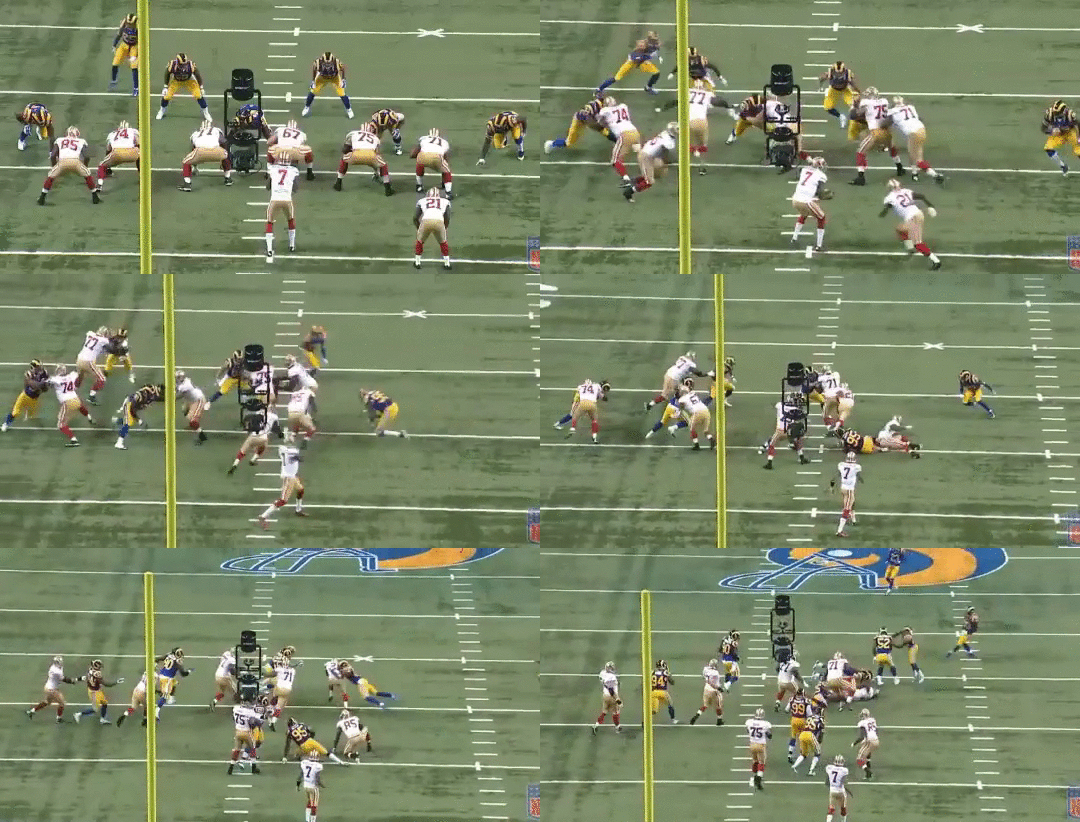
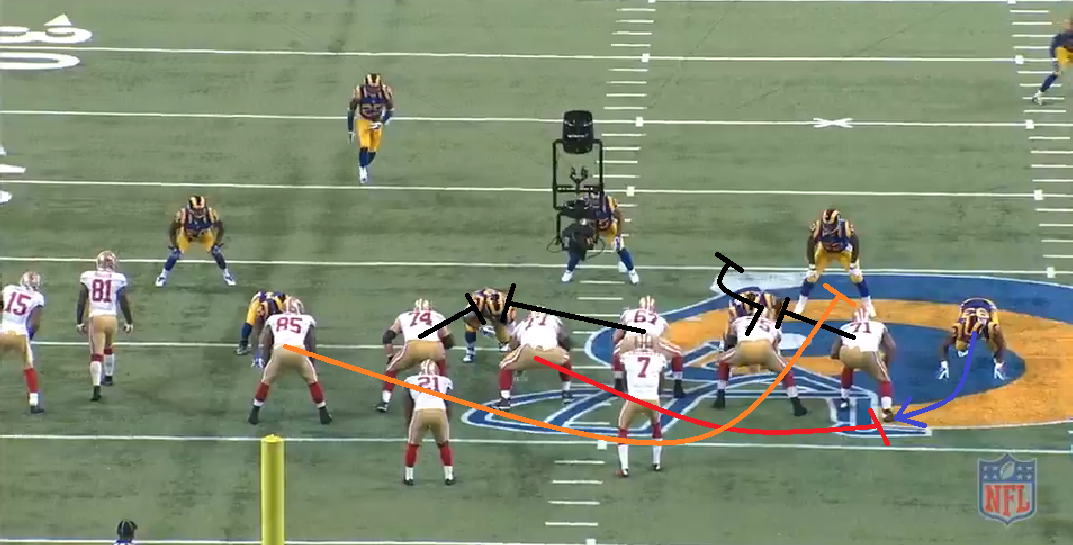
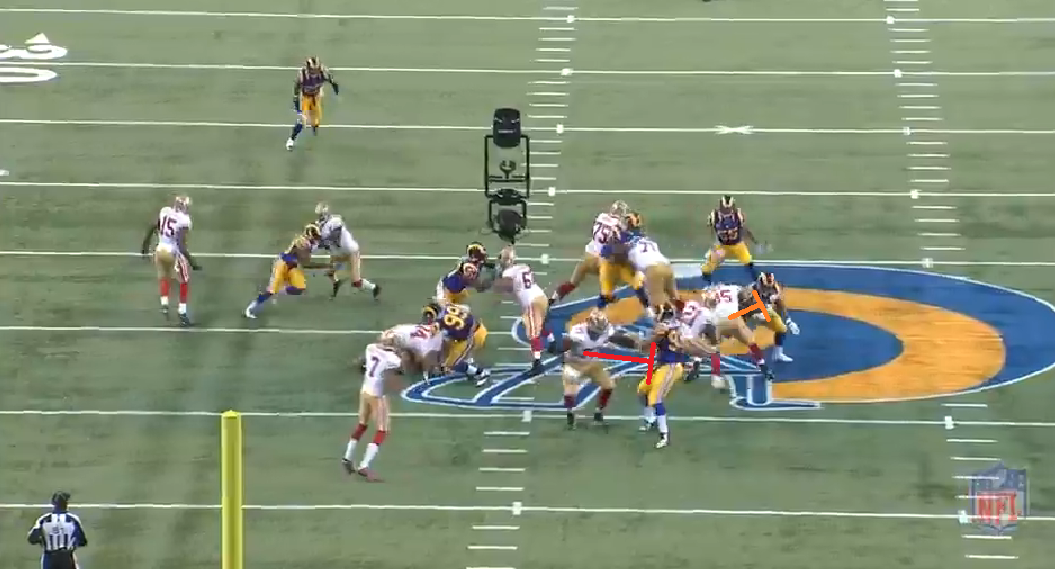
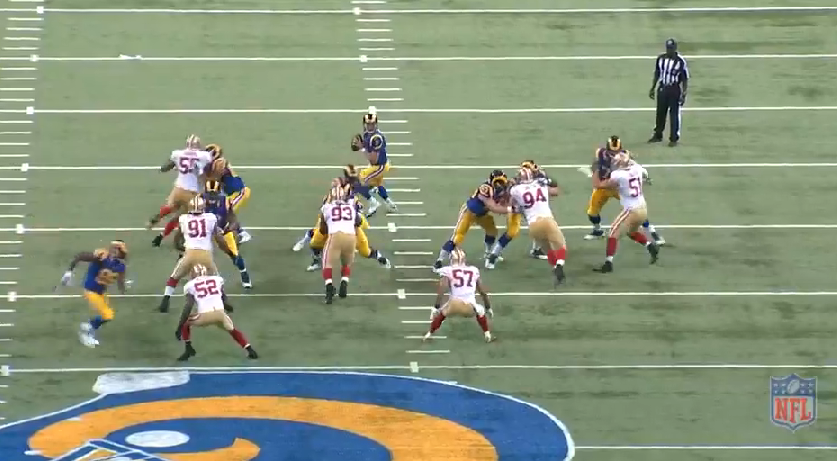
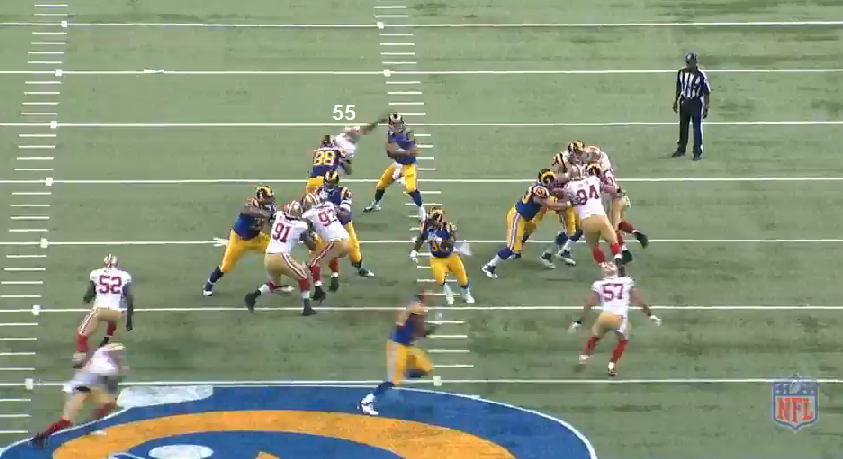
This is a 'split zone' run. The OL starts off blocking like an inside zone run while VD comes across the formation to block the cutback defender. This gives Gore the option of cutting back and knowing that the cutback defender is being blocked.
The LBs all flow to the left (from OL point of view). Gore gets the ball and cuts back to the right.
+7 yards.

Originally posted by thl408:
Runs from 11 Personnel
#4
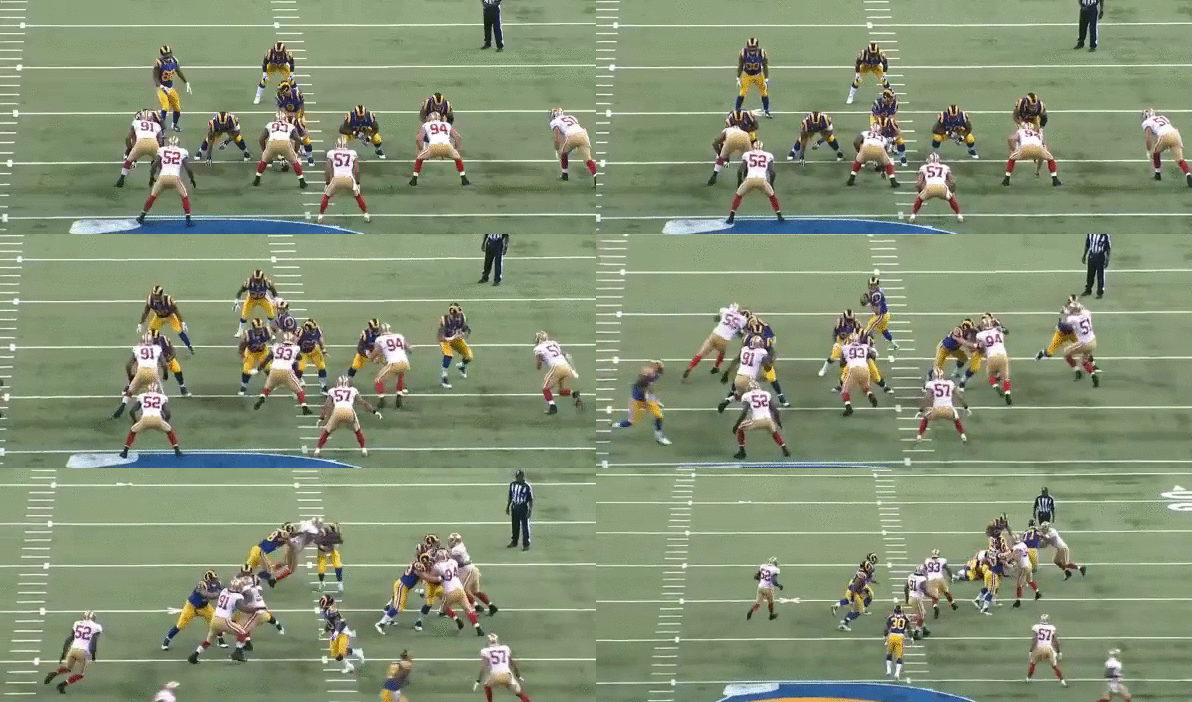
Bunch formation. This is the play where Iupati got injured.
Pull Iupati for the kickout block, VD leads through the hole off right tackle. So Gore has a lead blocker, the lead blocker just wasn't in the backfield like a FB.
+7 yards.
Originally posted by WRATHman44:
I have not heard the term "split zone" before. In my experience, the vast majority of zone plays (excluding zone read) feature some means to seal the backside EMOL. Most teams cut him to create the cutback seam. We rarely cut, but will occasionally slide a TE/FB/HB across the formation to provide a wham-type block to stop the flow of the EMOL and create a seam. For whatever reason, the 49ers are the only team that I have seen make the zone a significant component of their run game with no backside seal on the majority of their zone plays. Staley is really good at that backside cut when he does it, Martin sucks at it, and I can't remember seeing Davis do it on a zone play. Hyde has missed the cutback lane a few times (when they do seal the backside), but Frank almost always hits it for a decent chunk of yards (LOVE Frank). Running zone without the cut phase seems to really limit the RB's options, IMO. There is nothing inherent in the play to punish the defense for over-pursuit. Maybe this is part of the HaRoman chess game (rewarding the defense for over-pursuit) and they are setting up a chunk PA pass rolling away from the zone action, but I haven't seen enough successful chunk plays to think that this is the intended purpose behind implementing the zone in this fashion.
johnny and thl: why do you guys think we insist on running the zone this way (most of the time), especially with a back with the vision and jump cuts of a Frank Gore?
Originally posted by WRATHman44:
Old school counter Y!!! I used to get to ISO pull on this play!! It was my favorite. Lead blocking is so much more satisfying than in line blocking. VD doesn't blow up the LB, but he does a good job engaging a moving target on the run.


Originally posted by thl408:
It's split zone because everything in front of Gore is an inside zone play. However, because VD comes across to execute, like you said, basically a wham block on the EMOL (End Man On Line of scrimmage, in this case the cutback defender) it gives Gore an option to cutback which is usually not available on a standard inside zone play. There are articles on the split zone concept on the web. Here is one fantastic breakdown of it.
I'm not sure why the 49ers don't do this more often. I agree that with Gore's vision, he can utilize the cutback lane very well. Perhaps with more inside zone plays, we will start to see this more and more. It was successful in this game, that's for sure.

Originally posted by Giedi:Really nice pass protection here across the board. Gore again did a fine job in helping the O Line out. Kilgore did a great job in just keeping on his guy and slowing him down. Kilgore shows his athleticism and quickness here and that's why I think in a pass first offense, he'd be outstanding. Gave time for Colin to lob that pass to Anquan. It's funny how Staley got twirled around because the DE hooks and holds him to prevent him from going out on the pass pattern. Great job by Colin to look to his probably 3rd read and fire a pass to him.
Originally posted by thl408:
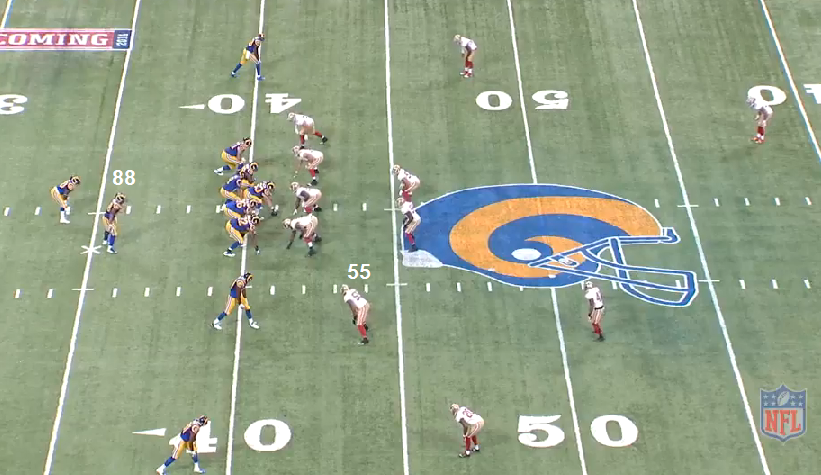
Here's Skuta's strip sack. It was also a drive killer as STL had to punt at the end of this set of downs.
2Q 1st & 10
Fumble recovered by STL. Loss of -8.
Anyone feel free to breakdown Skuta's technique here versus the left tackle Jake Long. I know there are posters here that really know the intricacies of pass rushing.
Originally posted by WRATHman44:
Originally posted by thl408:
It's split zone because everything in front of Gore is an inside zone play. However, because VD comes across to execute, like you said, basically a wham block on the EMOL (End Man On Line of scrimmage, in this case the cutback defender) it gives Gore an option to cutback which is usually not available on a standard inside zone play. There are articles on the split zone concept on the web. Here is one fantastic breakdown of it.
I'm not sure why the 49ers don't do this more often. I agree that with Gore's vision, he can utilize the cutback lane very well. Perhaps with more inside zone plays, we will start to see this more and more. It was successful in this game, that's for sure.
I think it's simply an issue of nomenclature. Every zone we ran was a split zone, because we cut the backside. We just never called for a split zone, because that's simply what zone meant back then. If a "windback" call was made, the cutback was the primary read, otherwise the front side flow was the initial read, looking for whatever seam presented itself. We also assumed every zone was an outside zone, converting on the fly to an inside zone if the playside tackle was unable to hook the playside EMOL. It was 15 years ago, and pretty much every zone concept (excluding zone read) was present on every called zone play.
These days, coaches have seized more control of the play flow, and players seem to have less encouragement to simply flow with the play. It seems like the natural evolution of offensive football, as coaches are the ultimate control freaks (I know I am, lol), and often very gifted players lack the mental flexibility to adjust to multiple stimuli during the flow of a play (Mike freaking Iupati). I do know that when we had a RB who could read the block of the playside tackle, the multiple potential frontside seams, and see the cutback lane, all the while assessing LB flow, we were extremely dangerous as a running team. The drawback is that many very good RBs can not see the field well enough and fast enough to succeed as zone backs (leading back to the earlier point regarding specific calls to limit the scope of what players must consider/react to at once). Making the zone more accessible to all RBs appears to outweigh the advantage of presenting a more flexible, nebulous zone threat, in many schemes. It's too bad; I like the zone much more as a play when it is fully adaptable to the defense, as long as the players are able to adjust swiftly.
Originally posted by thl408:
Yeah it's just nomenclature. I agree most zone plays have a cutback lane. It's how the cutback lane is created. Sometimes it's the QB executing bootleg action that forces the cutback defender to stay disciplined (SEA) in case the QB kept the ball, or cut blocks on the backside defenders. In what's called the split zone above, it's basically a wham block, like you noted. Just terminology. I wanted a way to distinguish it as something different rather than just call it "inside zone with a wham bock on the cutback defender".