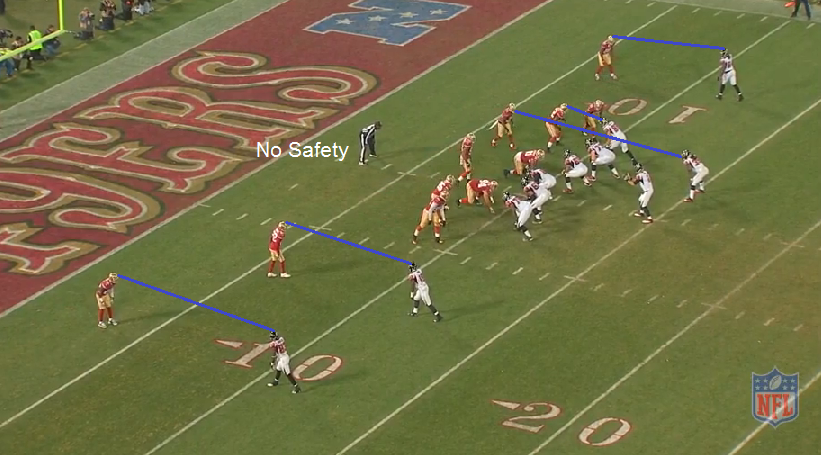
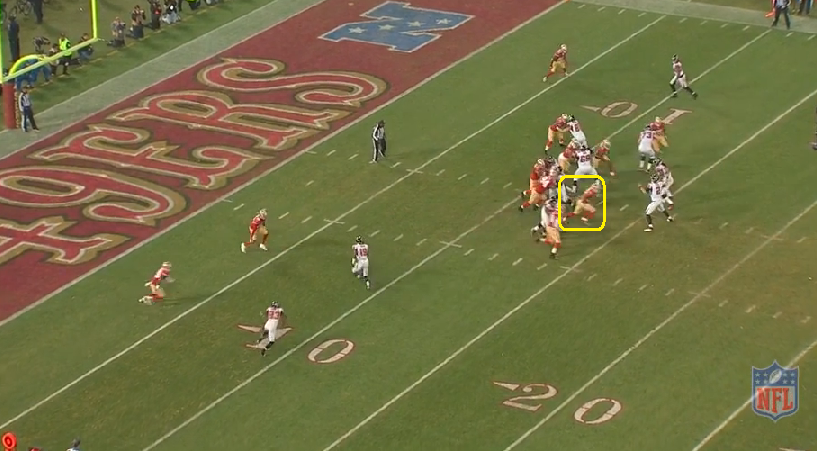
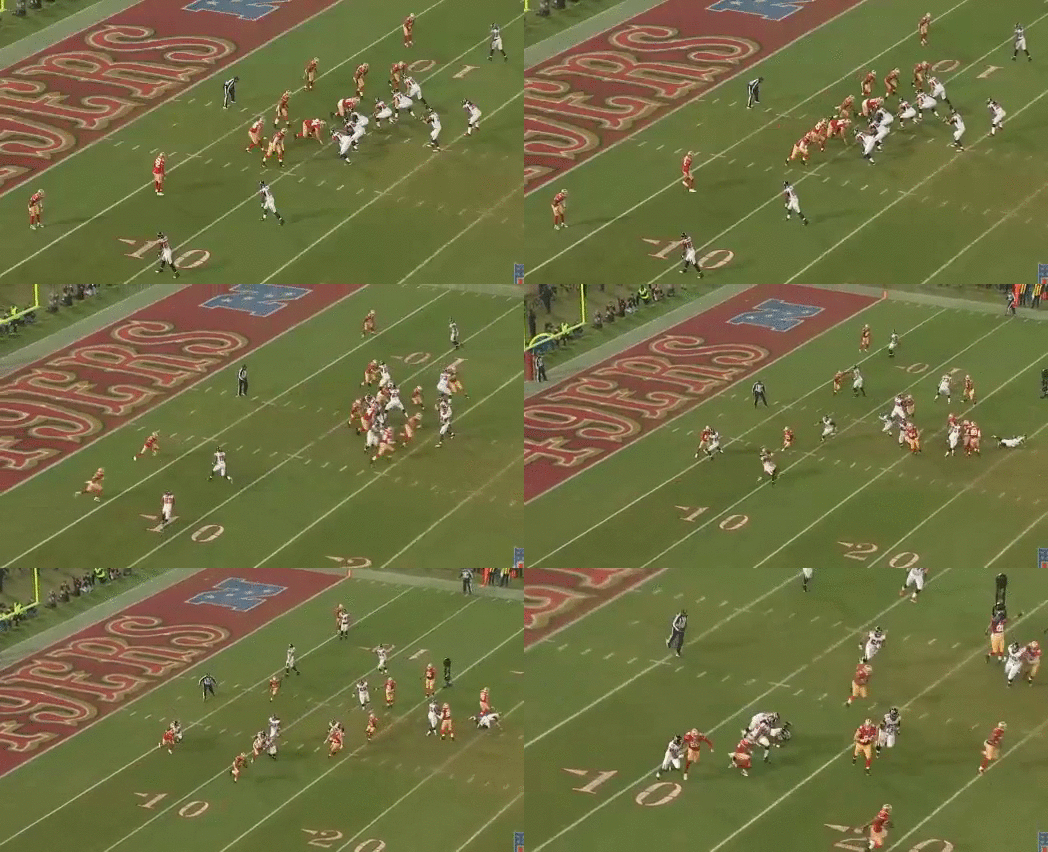
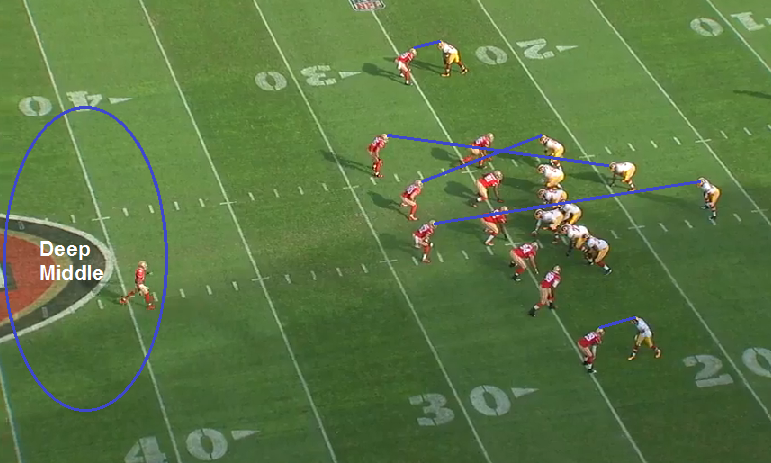
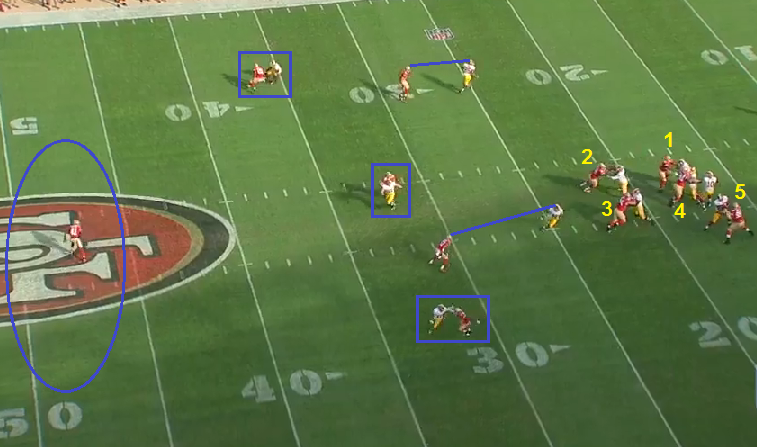
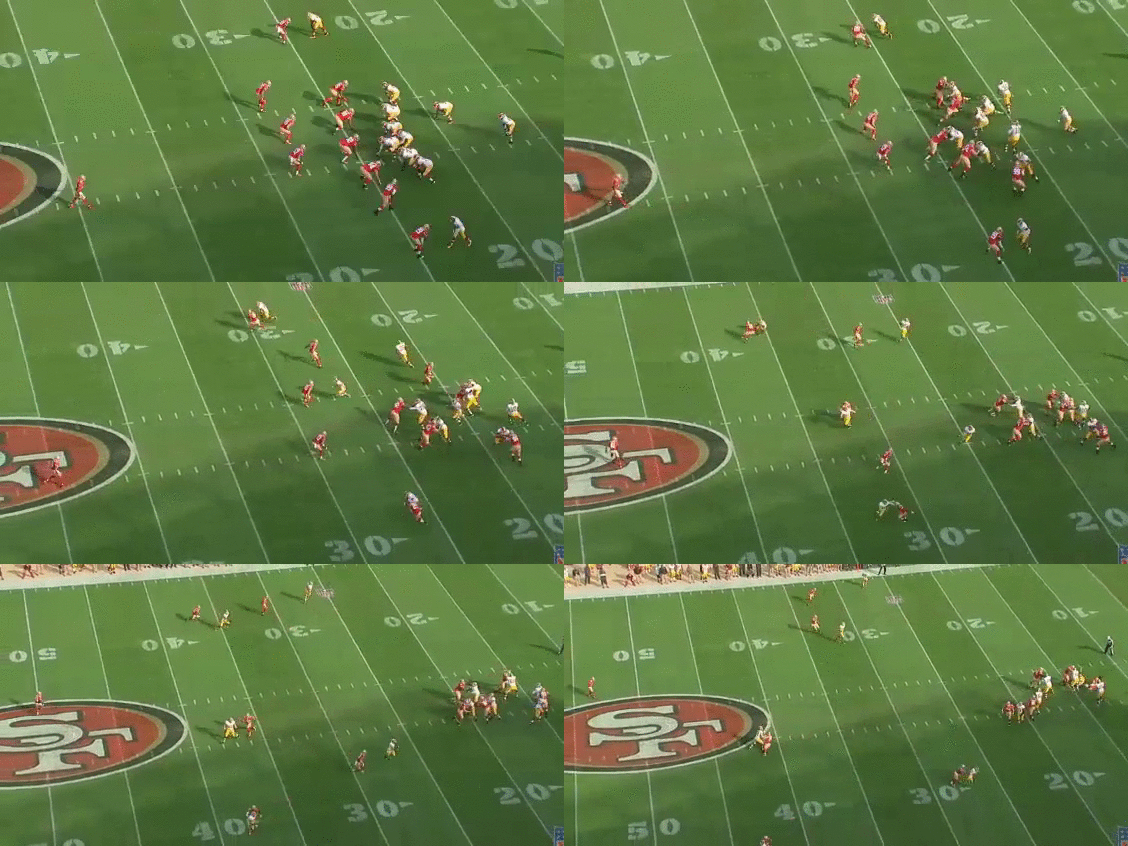
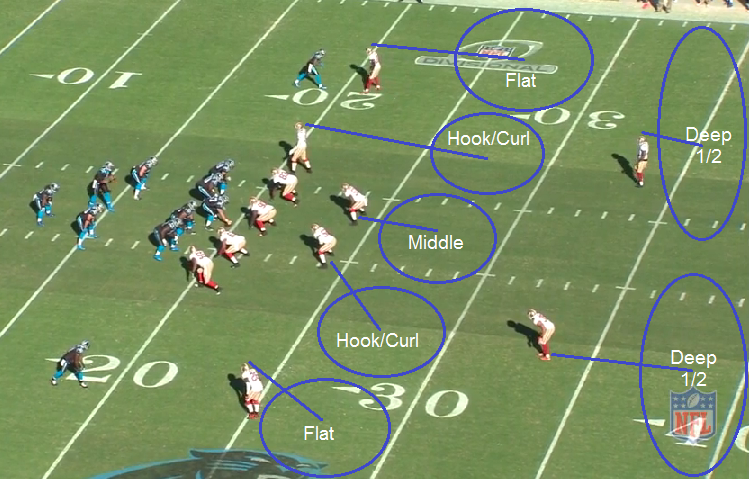
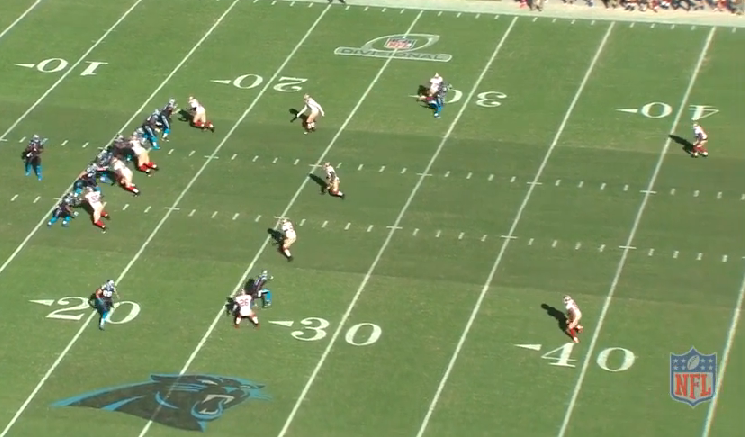
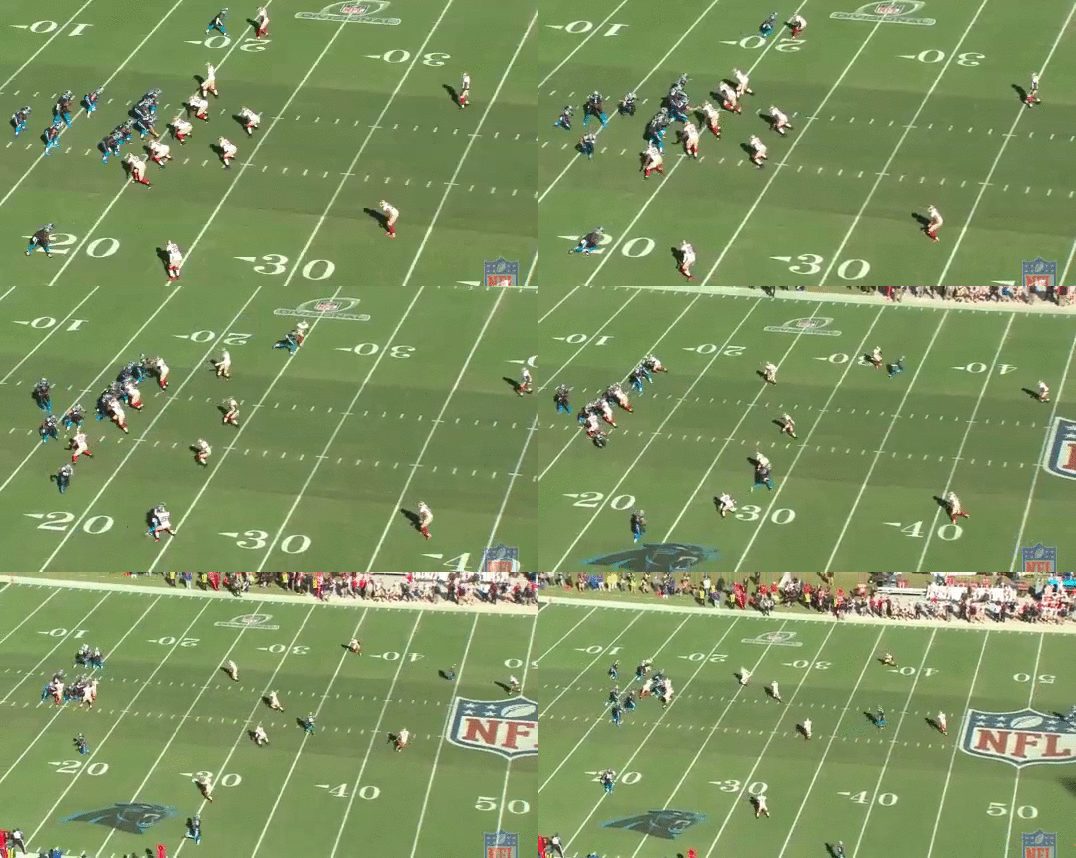
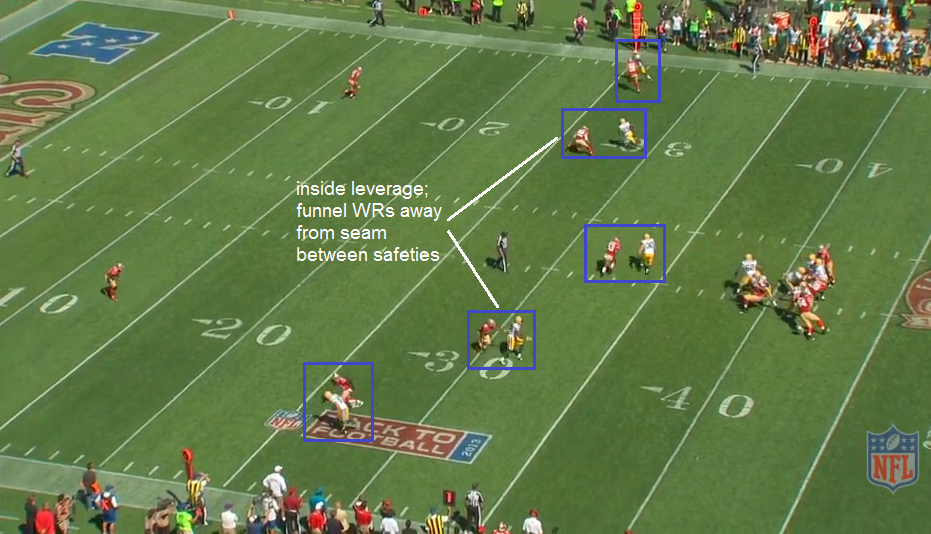
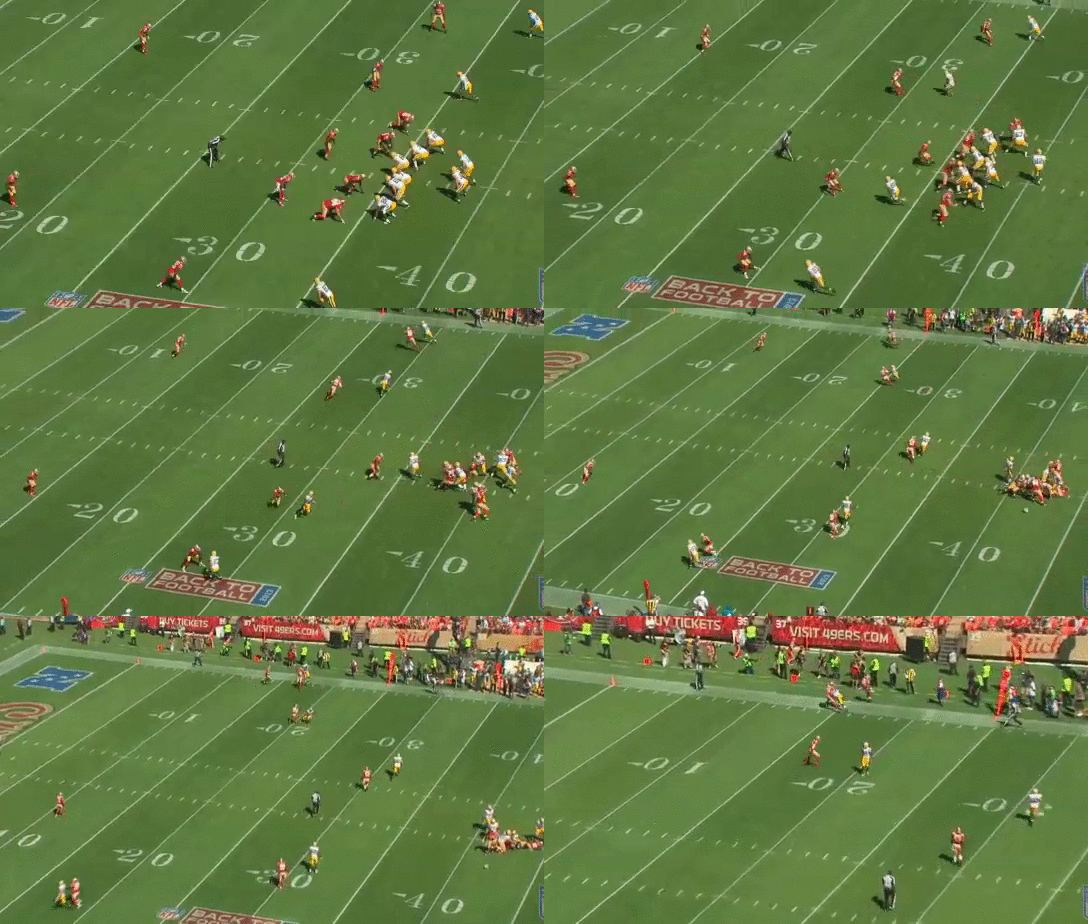
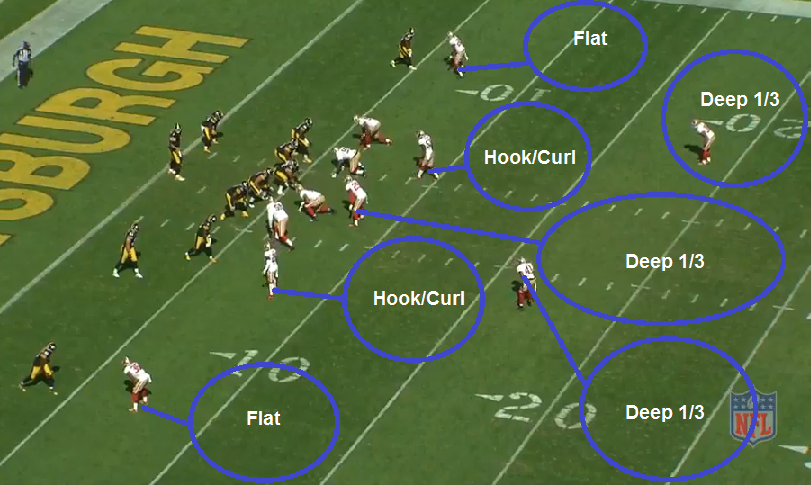
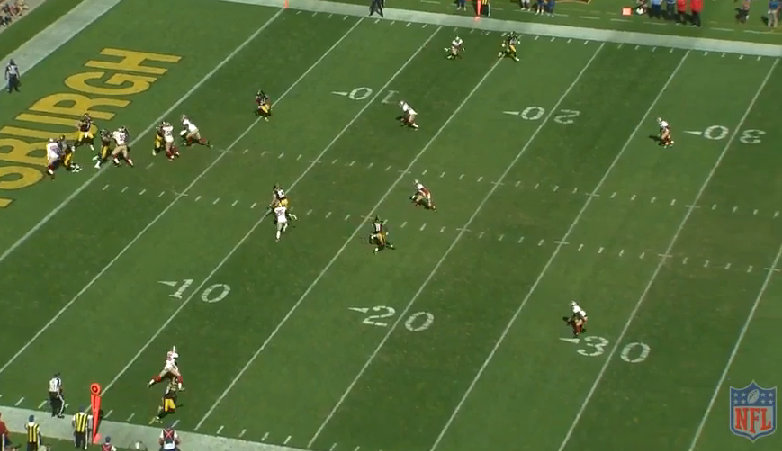
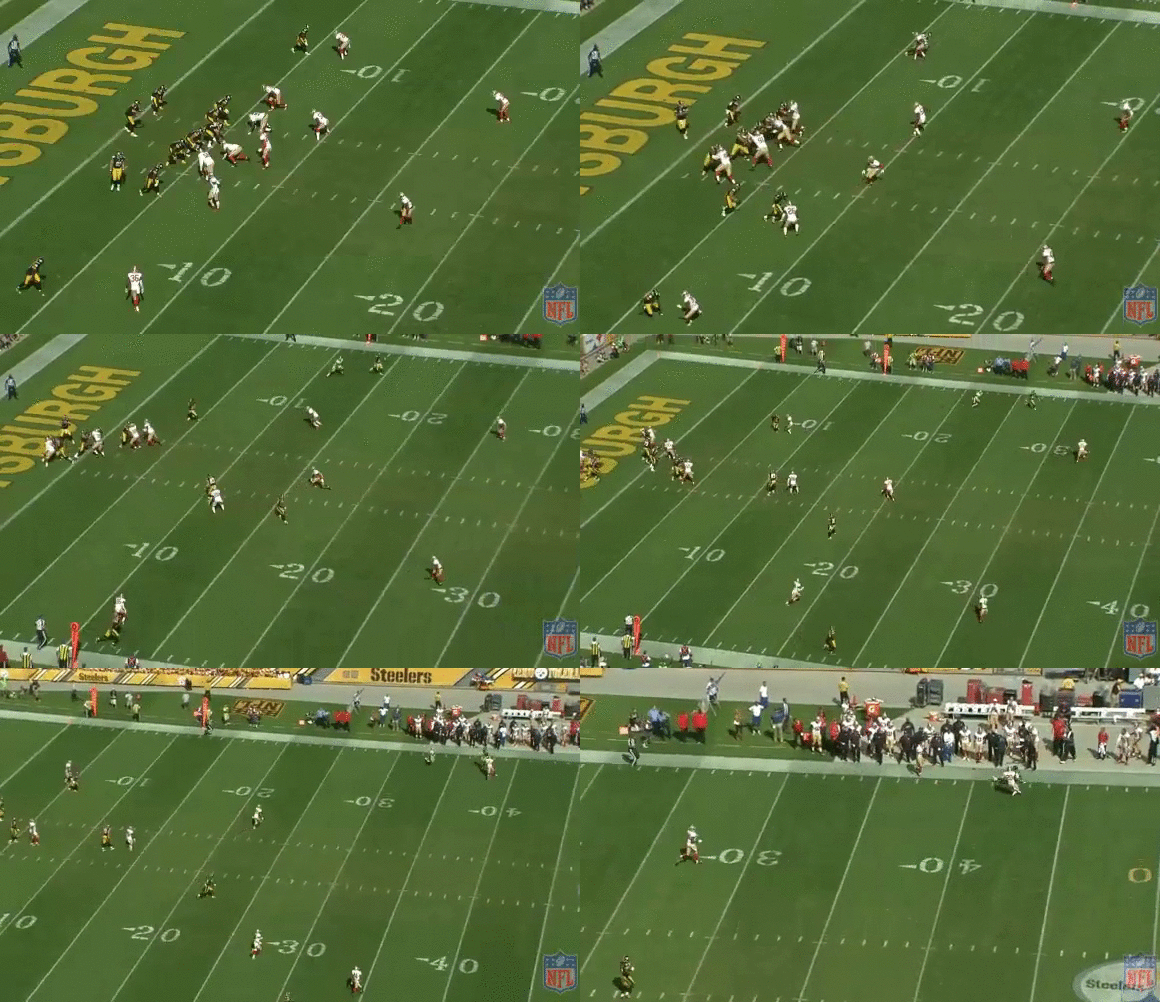
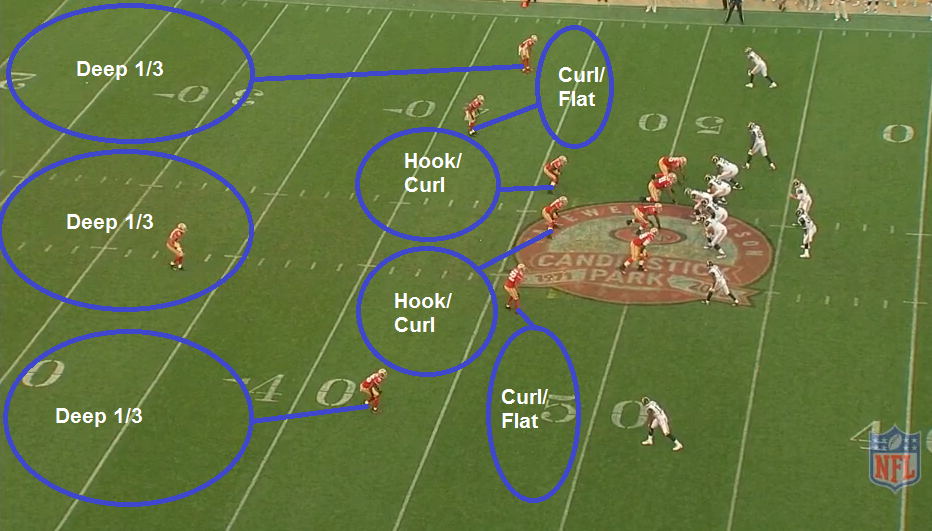
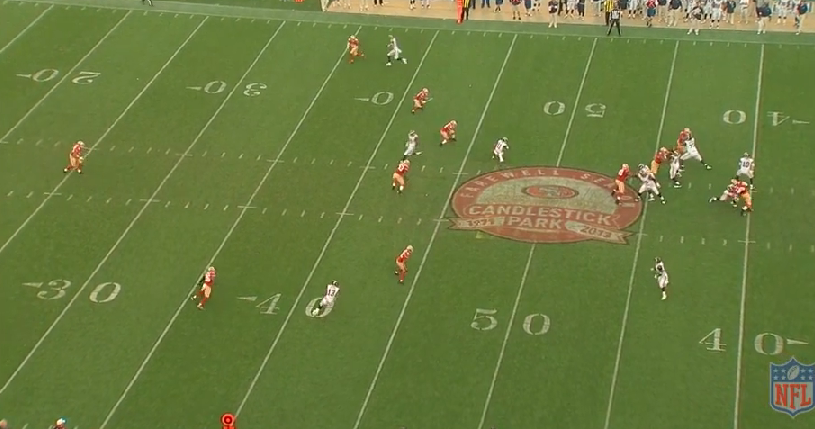
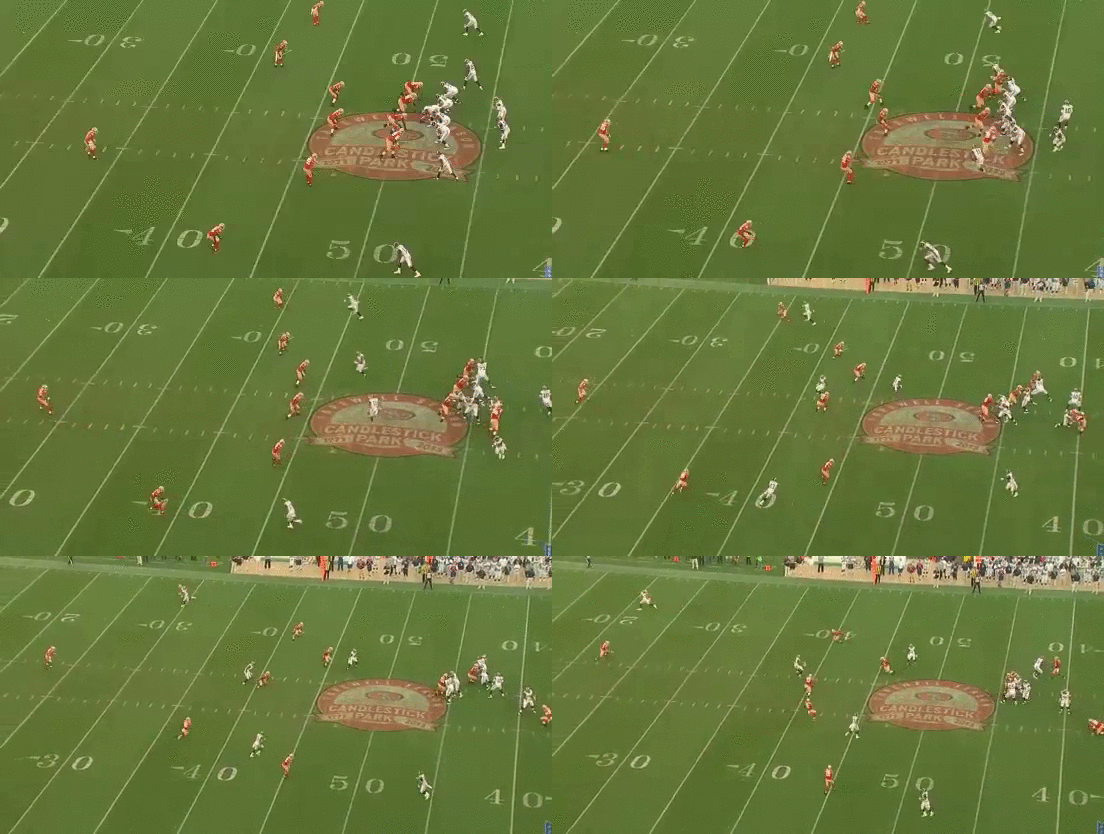
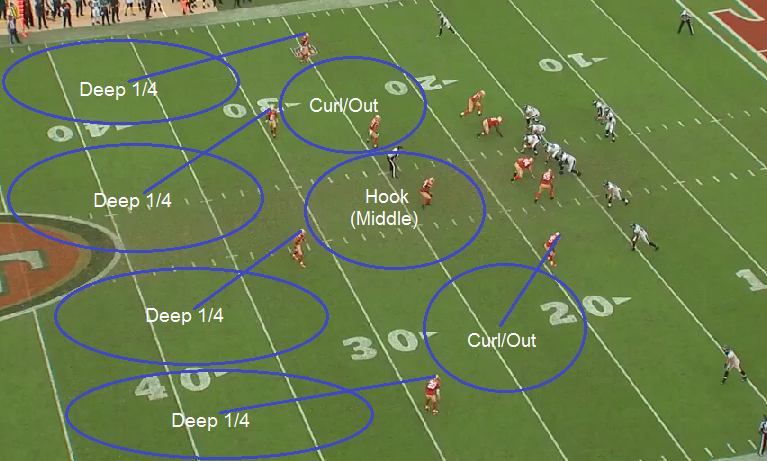
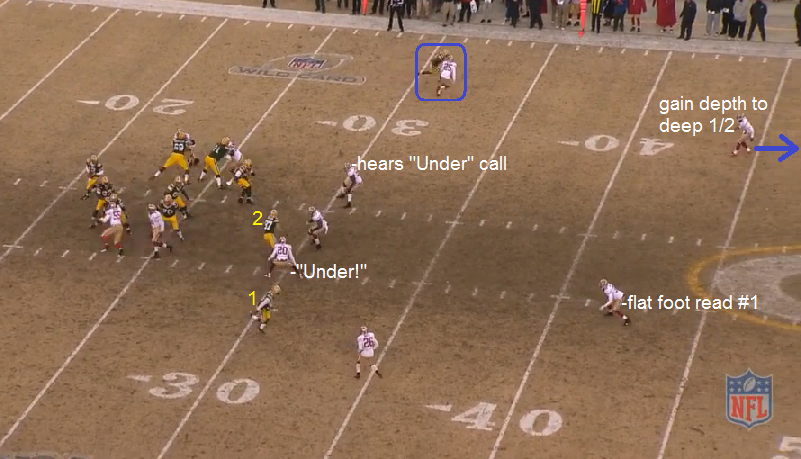
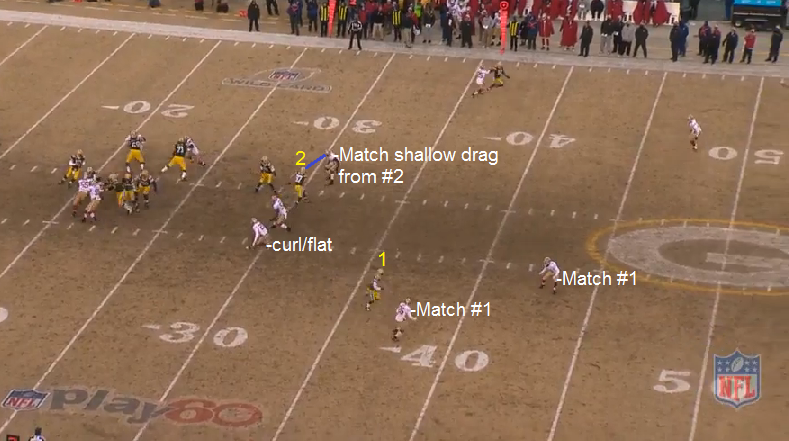
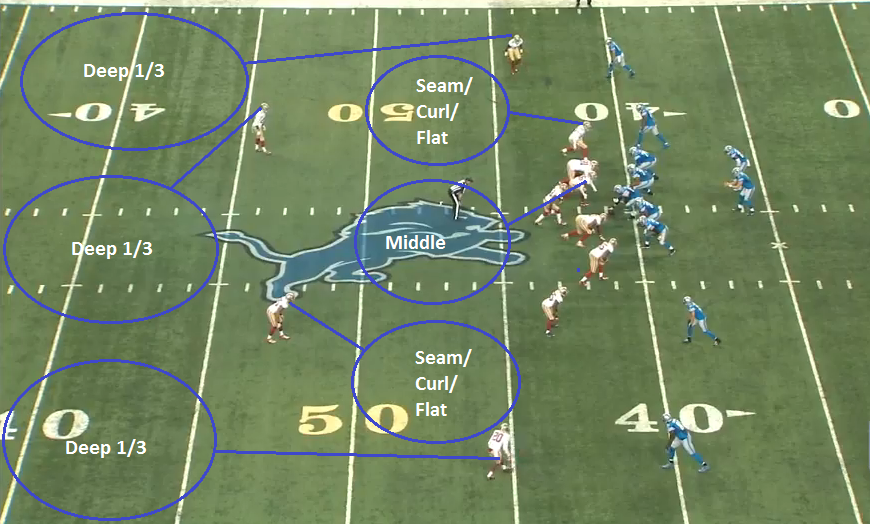
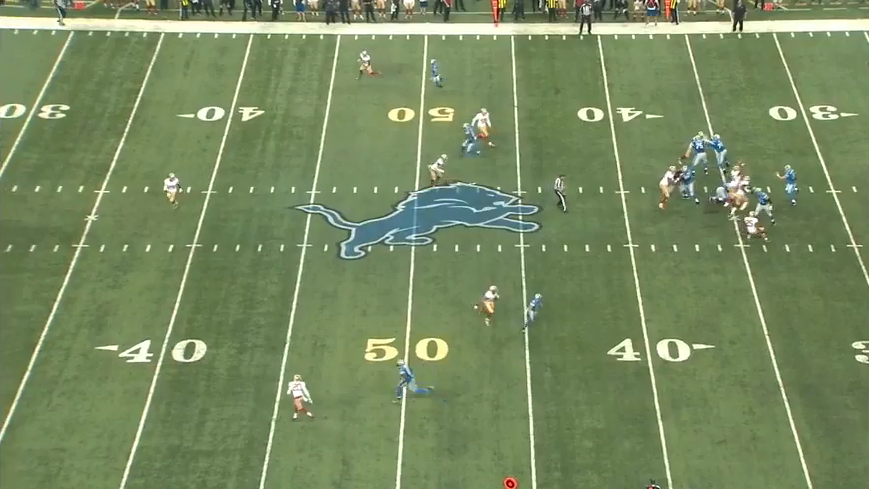
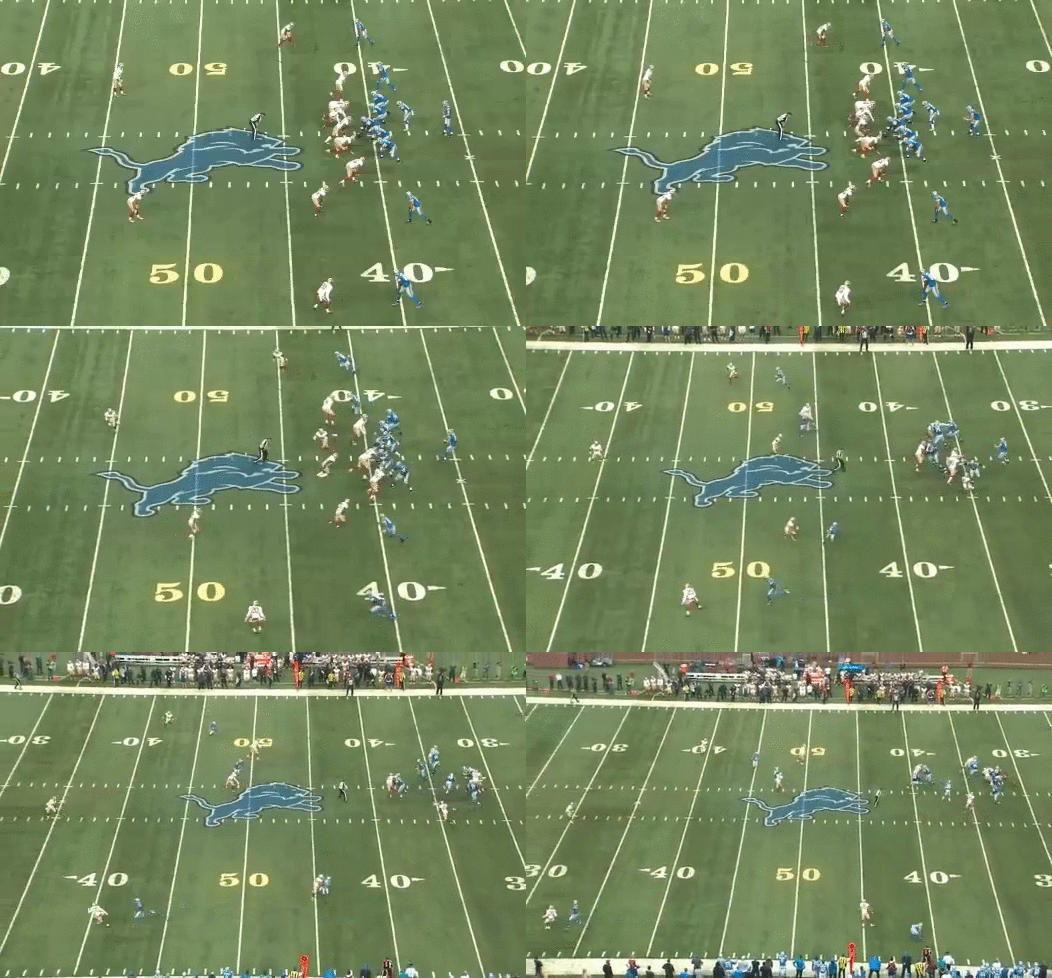
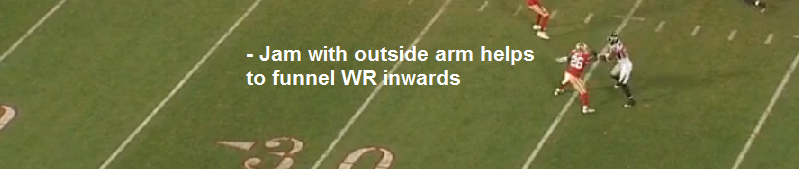
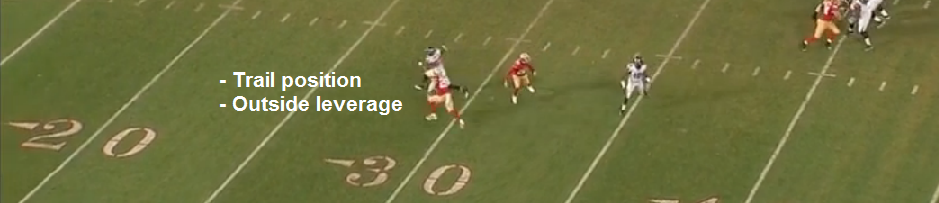
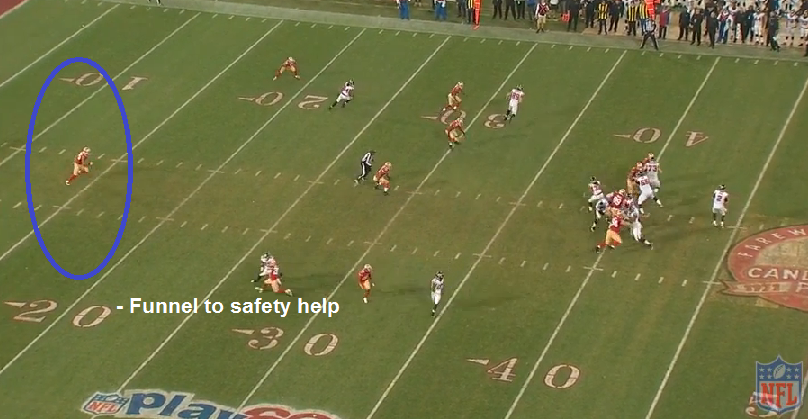
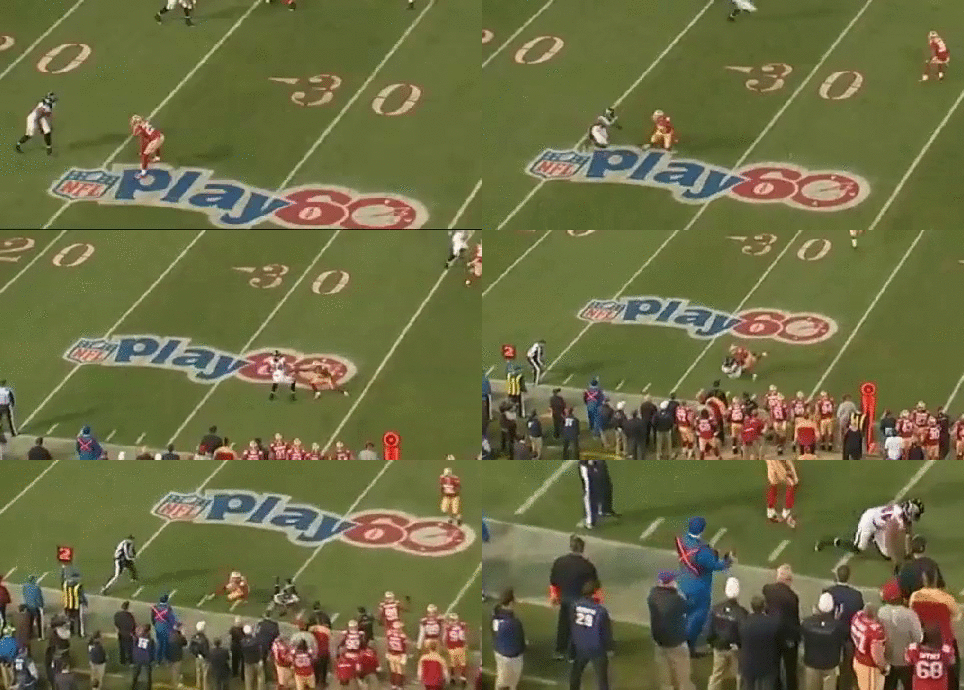
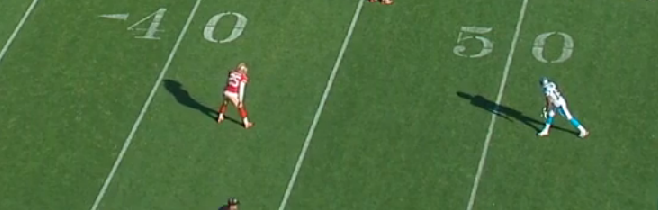
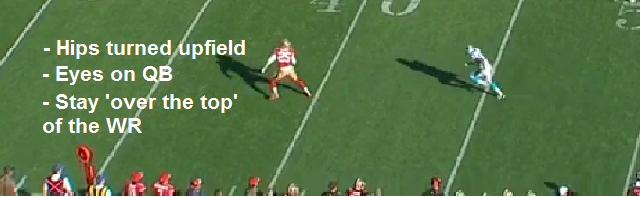
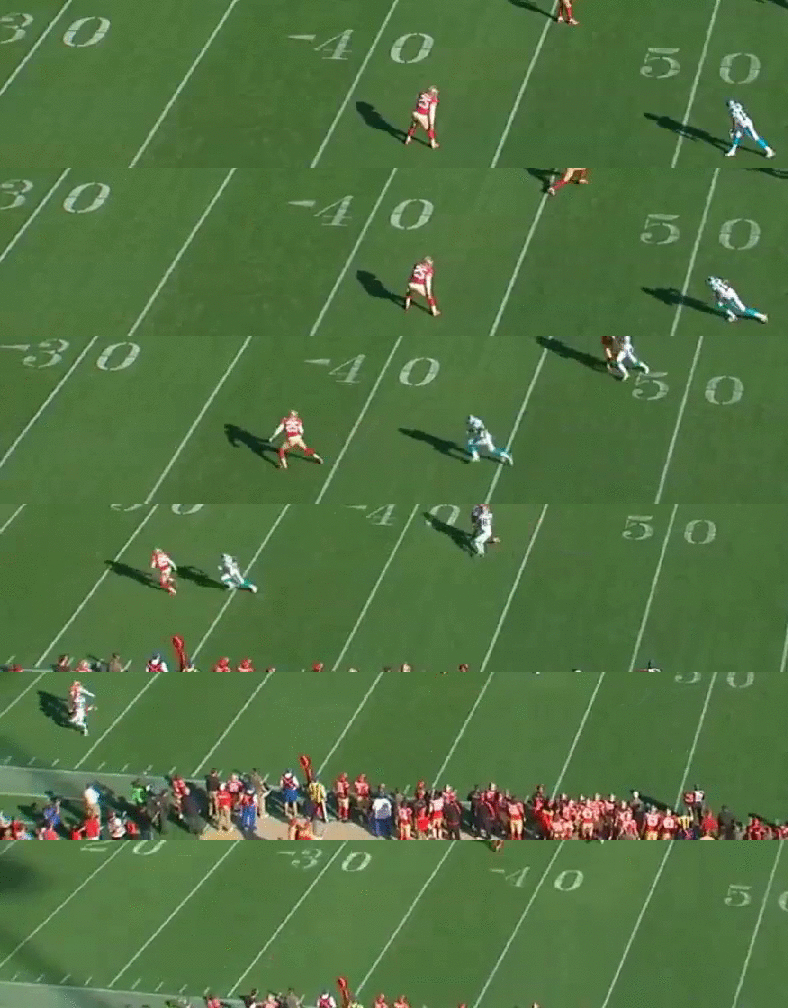
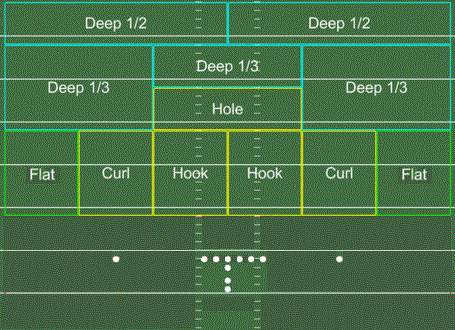
The field is normally divided into six underneath zones - flat, curl, hook, hook, curl, flat. The deep zones are divided into halves, thirds, or fourths, depending on the number of deep zone defenders assigned by the coverage call.
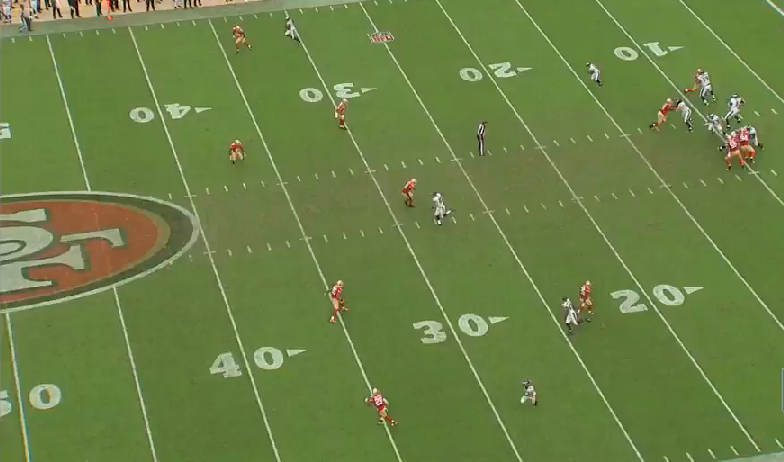
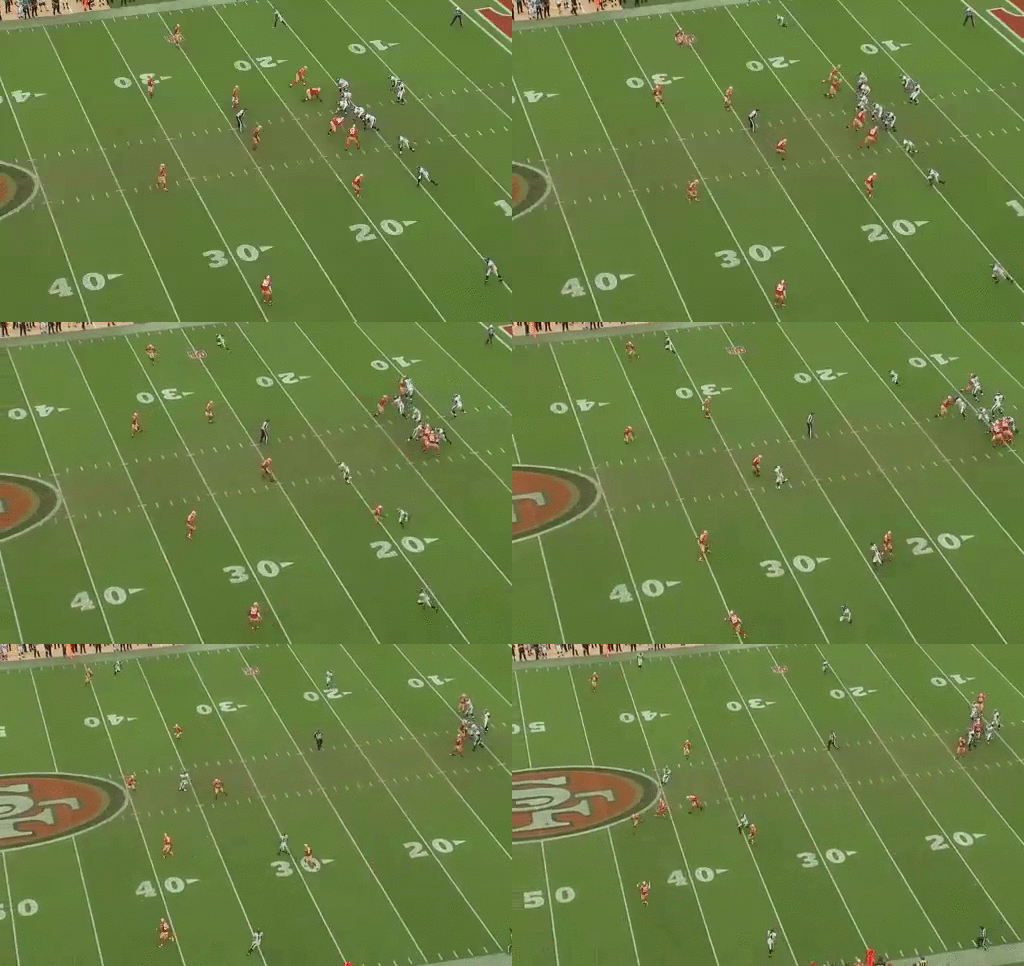
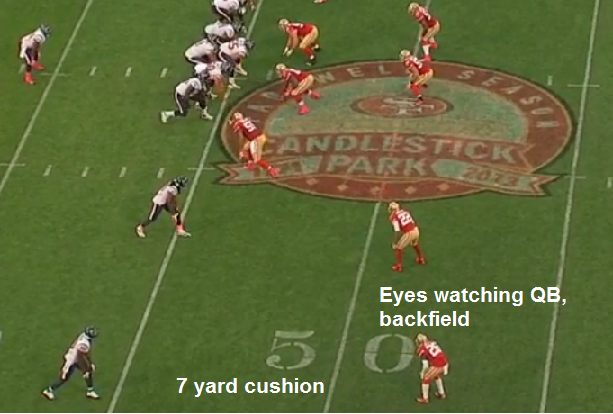
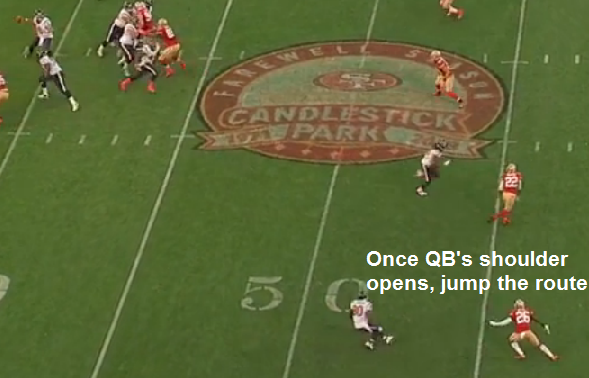
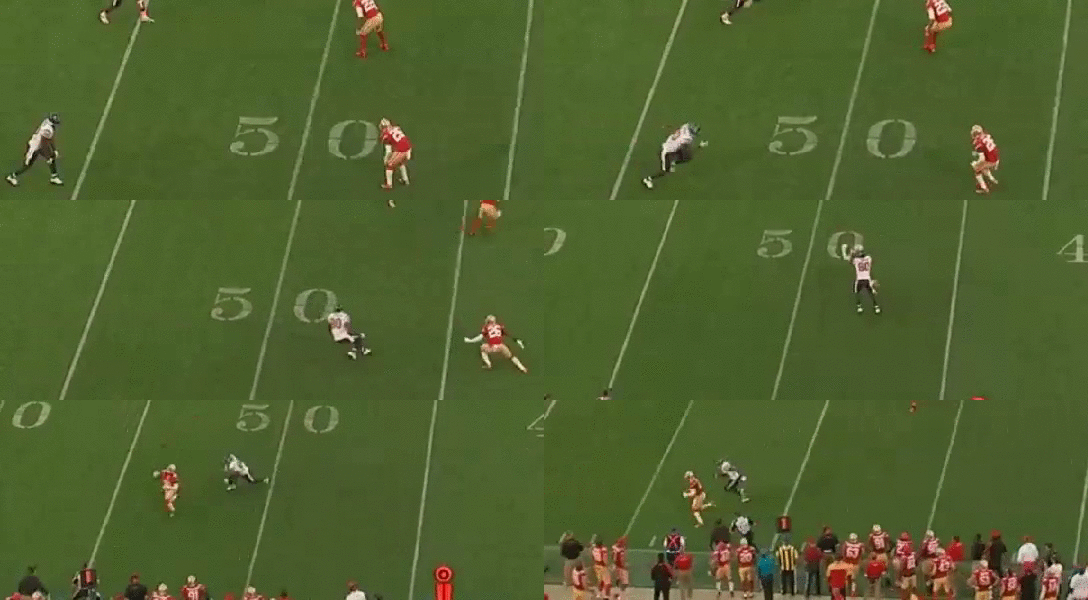
Spot Drop Zone is where a zone defender drops back to his assigned landmark on the field with his eyes on the QB. He is responsible for any route that comes into his area, while not leaving his area.
Strengths:
- Easy to read run/pass because eyes are on the QB/offensive backfield
- Ability to react to the pass, gang tackle the ball carrier, because more eyes are facing the play
- Defends crisscrossing routes
Weaknesses:
- More windows for routes to become open; soft (quiet) spots between zones
- Defenders can be covering grass and be a non-factor on the play if there is no threat to his zone
- If the pass rush does not quickly apply pressure, zones begin to stretch and defenders have more area to cover
- Zones can be stretched and/or flooded to create an outnumbering situation
_____________________________________________________
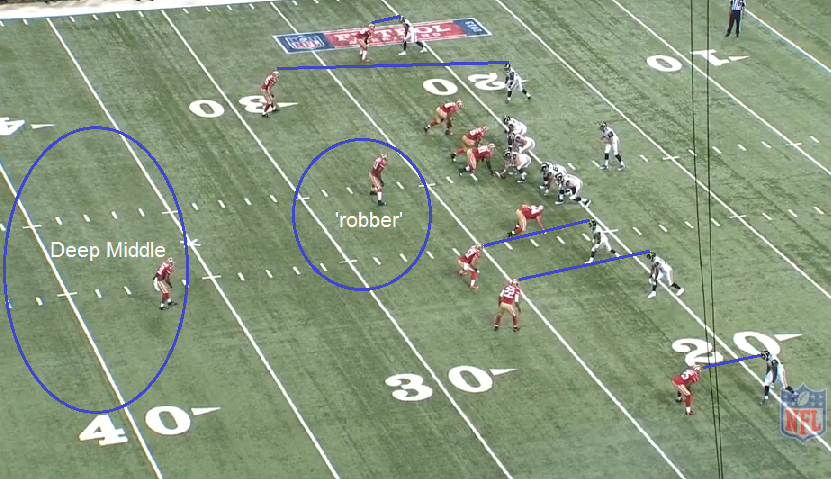
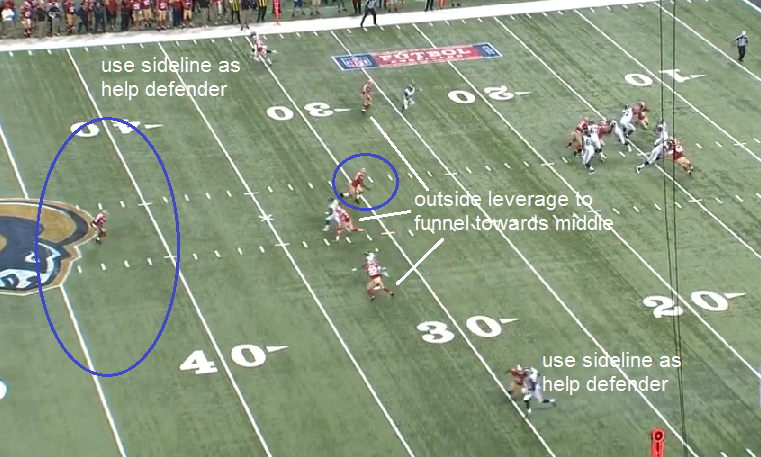
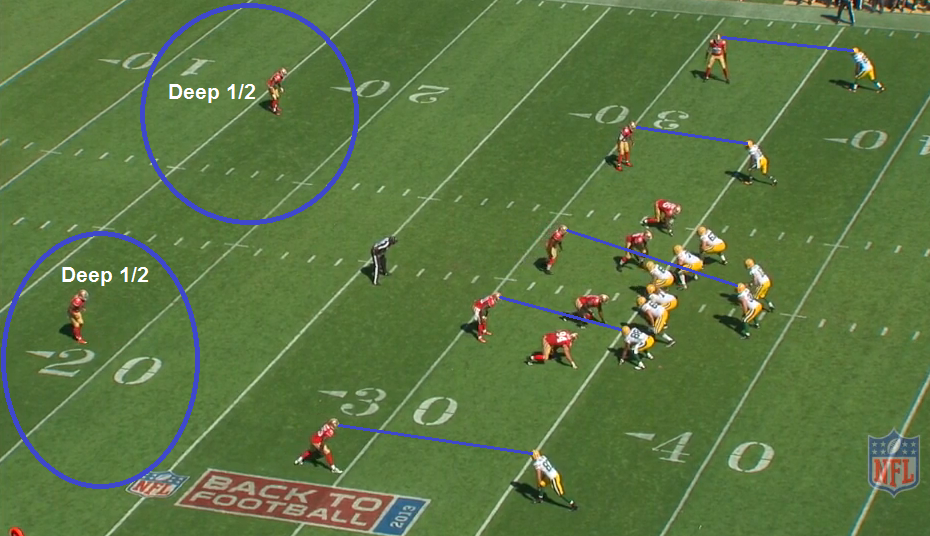
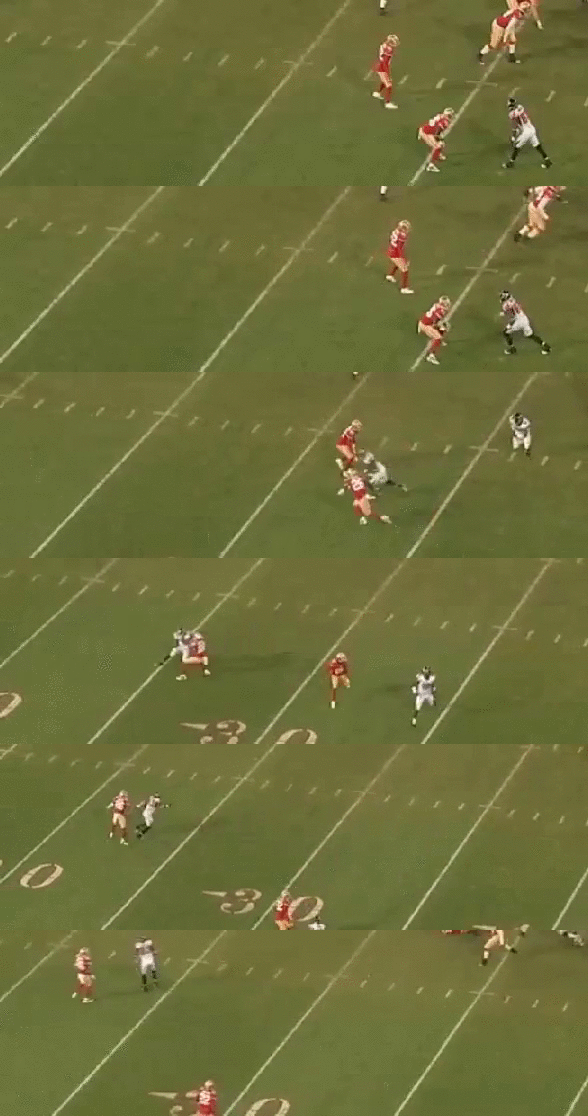
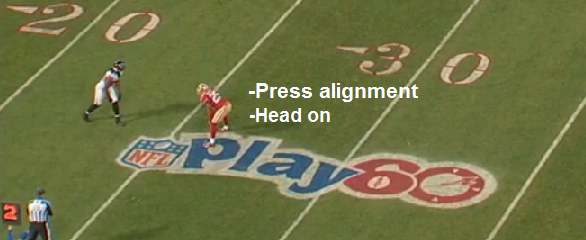
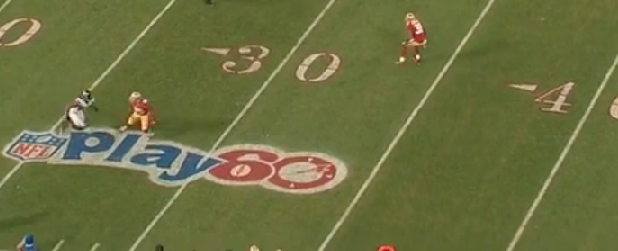
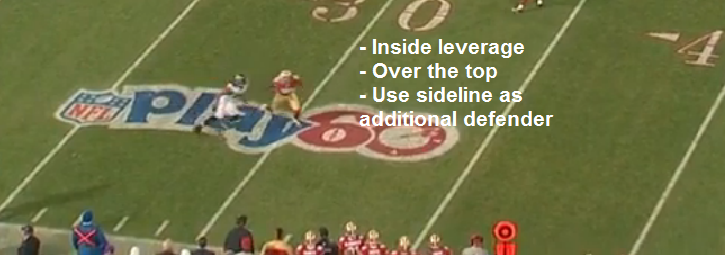
Man Coverage: Cover 0, Cover 1, Cover 2 Man
An offense can send out a maximum of five route runners. If a defense decides to play man coverage, five defenders are assigned to each eligible receiver. Assuming a standard four man pass rush, this allows the defense to have two 'free' defenders to be utilized in any way the defensive coordinator chooses: blitz, double team a WR, play zone, etc.
Strengths:
- Advantage in athleticism by the defender can result in the WR never gaining separation
- Ability to blitz and have each route runner accounted for
Weaknesses:
- Difficult to get run/pass read if eyes are locked on a WR at the snap (press alignment)
- WRs can gain more run after catch yards because defenders in man coverage don't know when the ball is thrown
- QB scrambles because defenders' backs are turned to the QB
- Difficult to disguise pre-snap when a WR goes in motion
- Pick/rub route combinations
_____________________________________________________
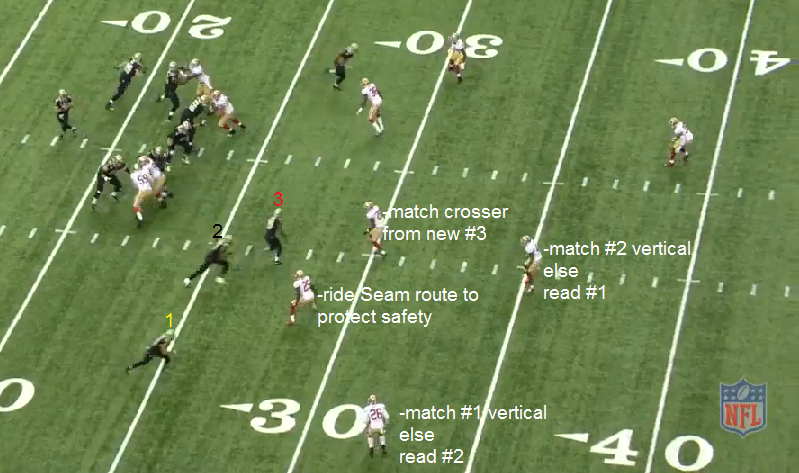
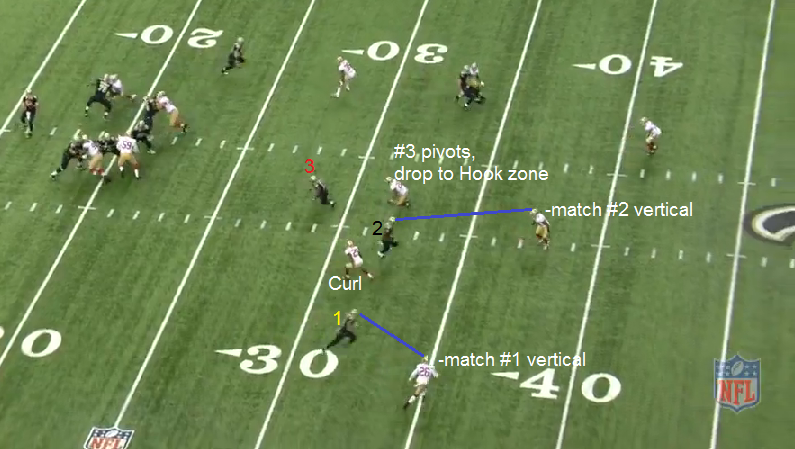
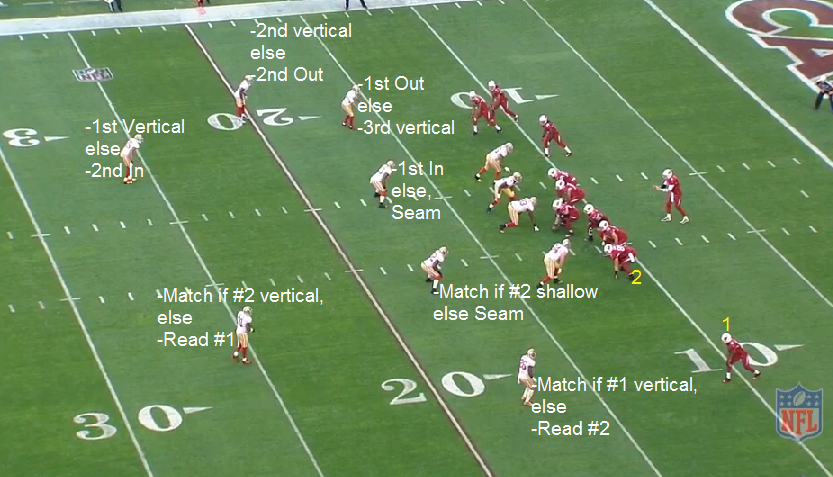
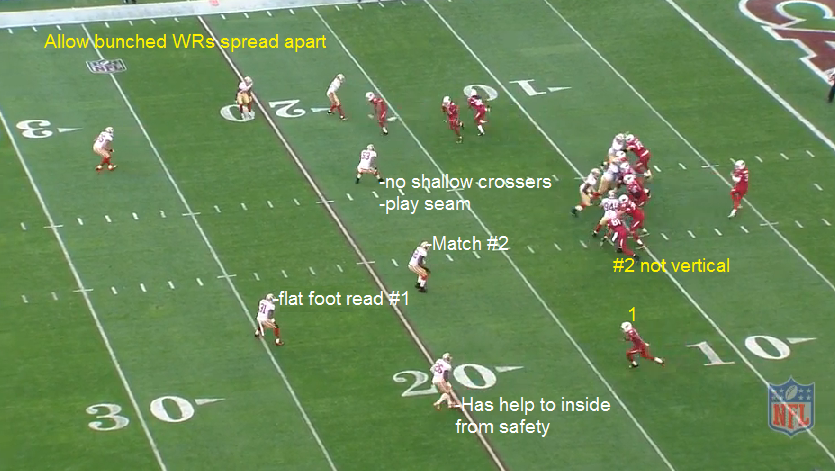
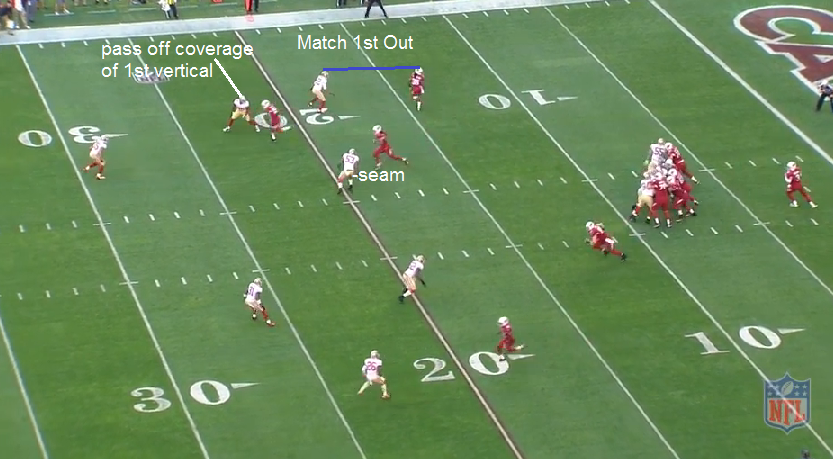
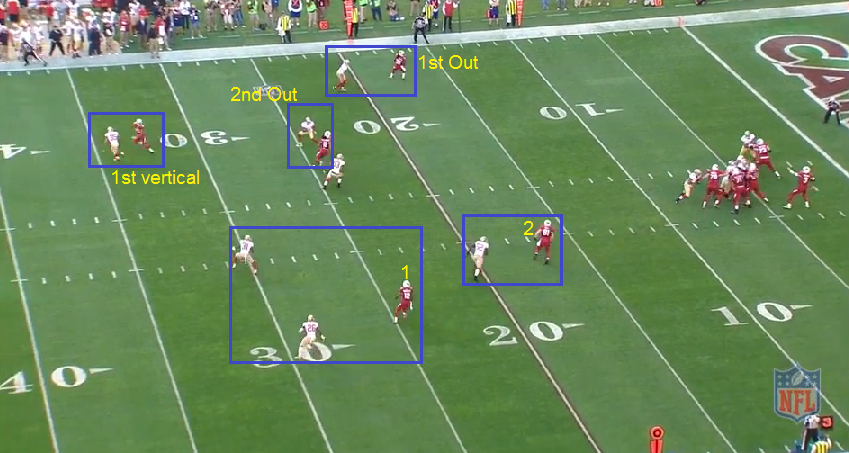
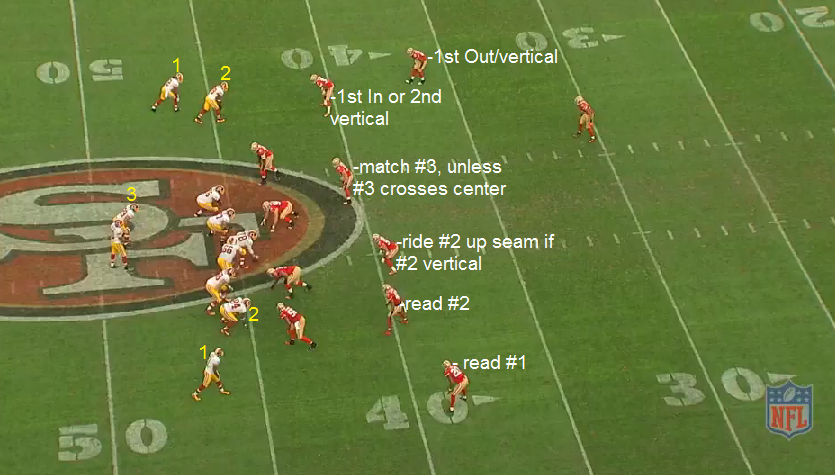
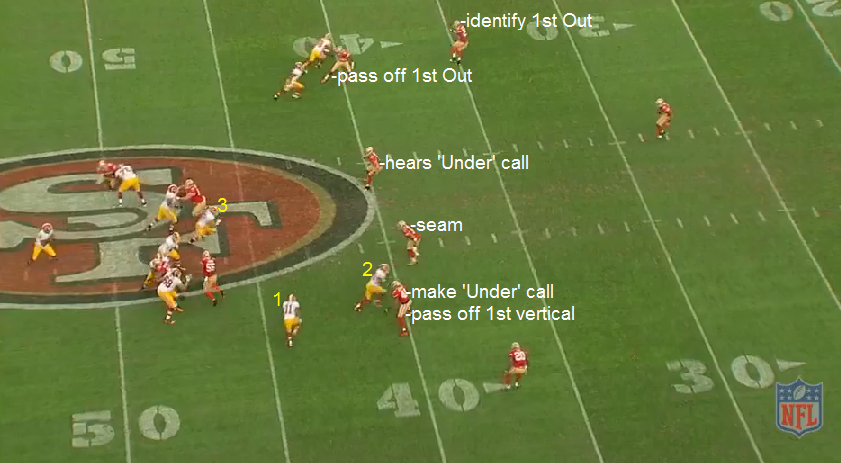
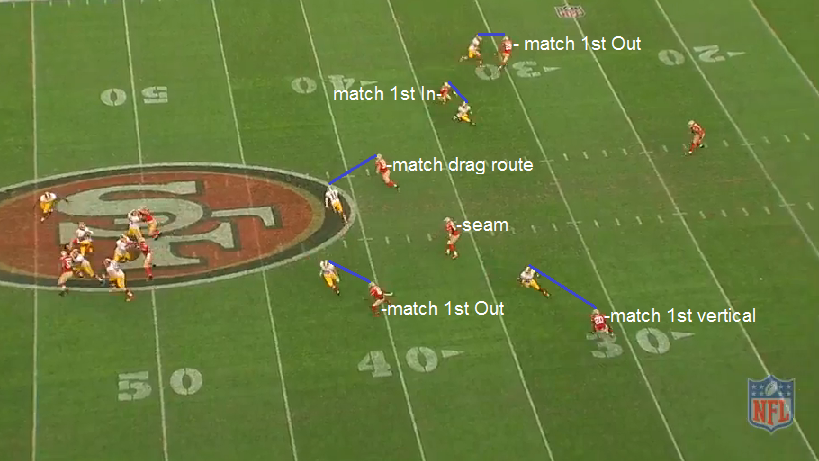
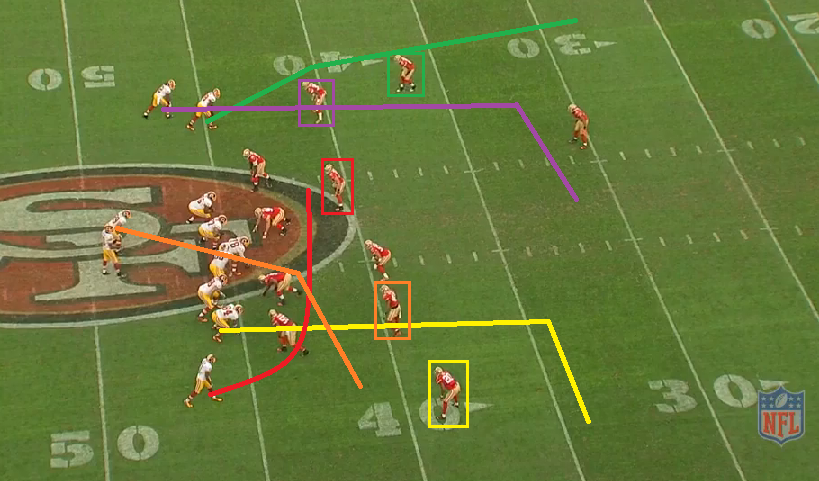
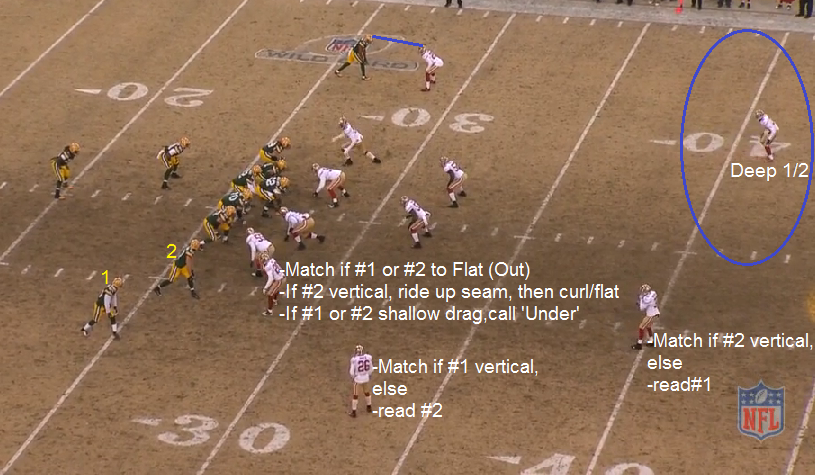
Pattern Matching (pattern reading, match zone)
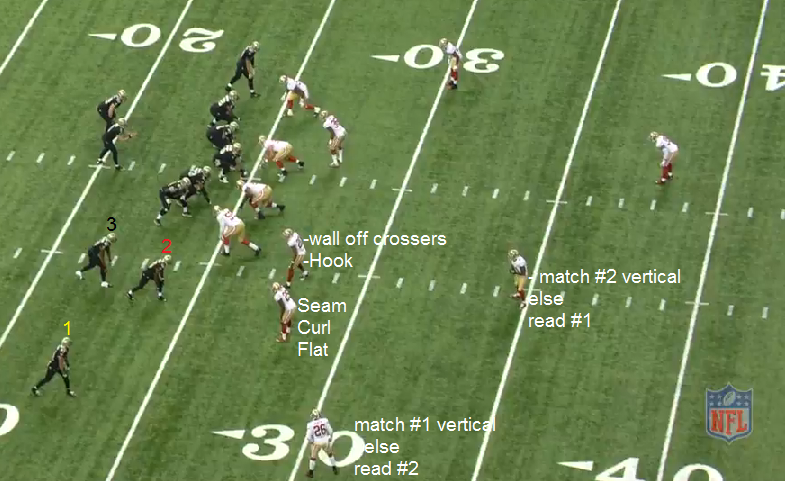
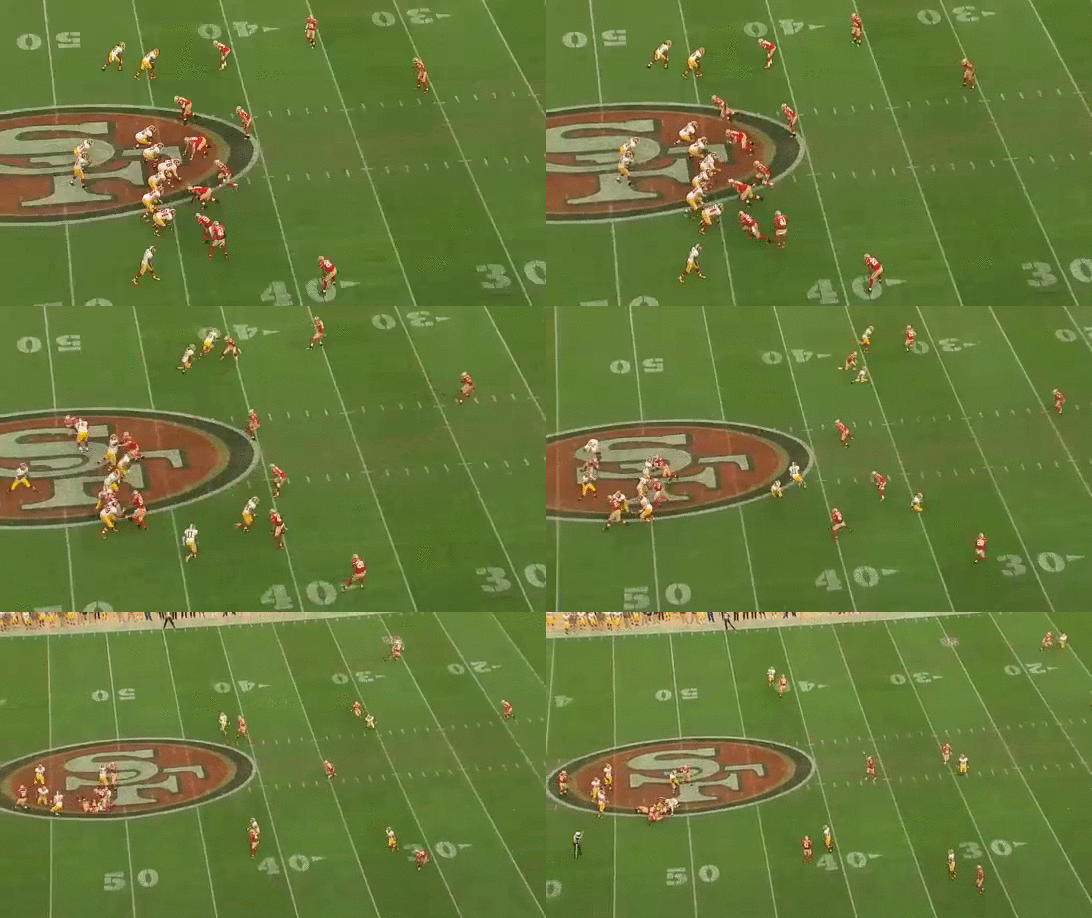
This coverage concept starts off as zone coverage, then morphs to man coverage as the play develops. The premise is that an offense has a finite amount of ways it can distribute routes throughout the field of play. Using pre-snap audibles and on-the-fly adjustments, a defense can cover any route while using the defender that is in the best position on the field to cover that route. It attempts to blend the best of both worlds from zone and man coverage. The origin of Pattern Matching came from Bill Belichick and Nick Saban when the two were in CLE where Belichick was the HC and Saban the DC.
Strengths:
- Tighter windows to throw into
- Defenders are less likely to cover grass as the coverage morphs to man coverage
- Ability to play split coverages to confuse the QB
- Can be incorporated into any cover shell (Cover 1/2/3/4)
Weaknesses:
- Difficult to teach on a team wide scale
- Blown coverages result in WRs running wide open
- Mismatches in coverage (safeties/LBs covering WRs)
- Late pre-snap motion/shifts can confuse pattern matching rules